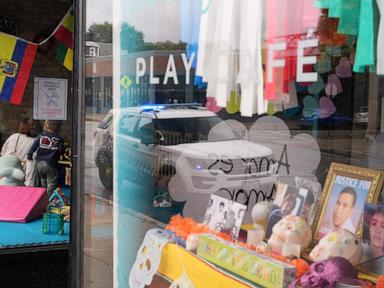
Accountability for federal law enforcement officers is rare. When federal agents use lethal force during local operations, transparency is often the first casualty. The family of Silverio Villegas González knows this reality better than anyone. After the 38-year-old Mexican father was shot and killed by Immigration and Customs Enforcement agents in a Chicago suburb, his loved ones began a long legal battle to demand answers.
If you are following immigration enforcement trends, you already know that vehicular encounters during targeted sweeps are a flashing red light for civil rights advocates. The legal claim filed by the family pushes past official narratives. It exposes major discrepancies between what Department of Homeland Security officials claimed and what body-worn camera footage actually showed.
The Disputed Narrative of a Routine Traffic Stop
The incident took place during an enforcement operation in Franklin Park, a suburb west of Chicago. Villegas González had just dropped off his child at day care. Unmarked vehicles boxed him in. Within minutes, the confrontation escalated to gunfire.
DHS officials defended the shooting immediately. They claimed the driver used his vehicle as a weapon, intentionally ramming an ICE vehicle and seriously injuring an agent who feared for his life. That story crumbled under scrutiny.
Lawyers for the family pointed out glaring flaws in the official report. Police body-worn camera footage captured the injured agent telling responding officers that his injuries were minor. Furthermore, attorneys demonstrated that the agent was never actually in the path of the vehicle. Instead, the agent chose to grab onto the windows of a moving car, creating the very danger used to justify lethal force.
When federal agencies investigate themselves, they rely on built-in institutional defenses. Local independent investigations, such as the probe launched by the Illinois State Police, provide a crucial counterweight. Witnesses and local leaders have consistently argued that federal tactics during sweeps rely on intimidation rather than standard policing best practices.
Why Accountability Claims Face Massive Legal Roadblocks
Filing a wrongful death claim against federal officers is an uphill battle. Qualified immunity and federal sovereign immunity protect government employees from civil lawsuits in many standard scenarios. Yet legal teams are finding new avenues to challenge agents who step outside constitutional boundaries.
- Lack of Body Cameras: Neither of the ICE agents involved in the Franklin Park shooting wore active body-worn cameras during the operation. This absence of direct recording equipment forces investigators to rely heavily on shaky security footage and civilian phone videos.
- Contradictory Medical and Police Reports: When initial statements from law enforcement contradict on-scene medical assessments, public trust evaporates completely.
- The Toll on Surviving Family Members: Beyond the courtroom, the human cost is catastrophic. Surviving relatives and children are left navigating trauma, grief, and sudden legal battles without institutional support.
Legal experts stress that civil claims serve a dual purpose. They seek financial restitution for grieving families, but more importantly, they force internal documents, training records, and agent communications into the public record.
What Comes Next for Immigrant Families and Legal Oversight
The fight doesn't end with a single legal claim. Civil rights organizations across the country are pushing for strict operational standards for federal immigration officers working within municipal jurisdictions. Local police departments are bound by strict use-of-force continuums and mandatory recording requirements. Federal task forces should be held to the exact same standard.
If you want to track how these cases progress, pay close attention to state-level investigative commissions and local prosecutor offices. When state police turn findings over to county prosecutors, it signals a shift away from absolute federal impunity.
Demand transparent investigations when federal agents operate in your local community. Support independent journalistic outlets that track civil rights violations rather than simply repeating unverified agency press releases.



