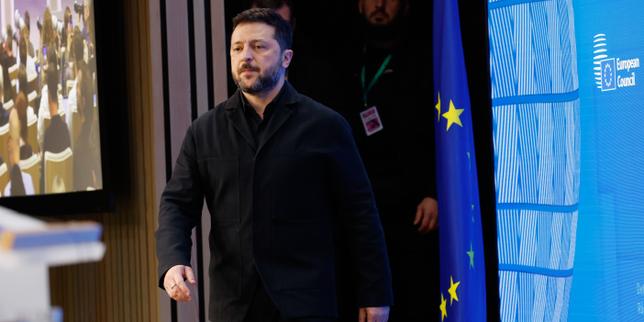
The political solidarity in Brussels has rarely looked so united on paper, yet the math behind keeping Ukraine afloat is falling apart at the seams. While European leaders keep repeating that they stand shoulder-to-shoulder with Kyiv, a brutal financial reality check is forcing governments to rethink how they pay for an ongoing war that shows no signs of wrapping up cleanly.
Right now, the conversation in European capitals isn't about whether to support Ukraine—that consensus remains firm. The real panic is about where the next tens of billions will come from. With an initial 90 billion euro loan package for 2026 and 2027 already being deployed—including recent disbursements like the 2.86 billion euros sent in mid-October for defense gear—experts are calculating that a massive funding gap of roughly 70 billion euros still looms large for 2027 alone.
The Mounting Bill and the 70 Billion Euro Question
You cannot fight a high-intensity conflict on good intentions and political communiqués. Kyiv's defense requirements, combined with the need to keep public services, pensions, and hospitals running, eat through capital at a terrifying speed.
The European Union and its member states have already mobilized well over 200 billion euros since the 2022 invasion through various mechanisms, grants, and military assistance packages. Yet, structural fatigue has set in. National budgets across major EU economies are strained by domestic deficits, inflation, and political pushback.
When you look closely at how previous funding deals were stitched together, you see the cracks. The 90 billion euro package agreed upon for 2026-2027 required creative legal engineering and bypassing traditional unanimous borrowing methods because countries like Hungary, Slovakia, and the Czech Republic expressed deep reluctance. Relying on twenty-four nations to shoulder the burden through alternative debt structures works until the domestic fiscal pressure becomes too loud to ignore.
Why Immobilized Russian Assets Remain a Contentious Fix
For months, politicians have pointed to one obvious piggy bank: the roughly 210 to 330 billion dollars of frozen Russian central bank assets sitting mostly in Western depositories, with the lion's share locked inside the Belgian clearing house Euroclear.
Using the profits generated by these assets—or leveraging them into a massive reparation loan—sounded like an elegant solution on paper. Why should European taxpayers foot the entire bill when Moscow's reserves are sitting right there?
The reality is messier. Legal experts and central bankers have warned repeatedly about the slippery slope of seizing or over-leveraging sovereign assets. Doing so risks rattling international confidence in the euro as a safe reserve currency. It opens up legal vulnerabilities that could take decades to untangle in international courts. While the EU successfully tapped into windfall profits and managed to release 6.6 billion euros through the European Peace Facility after clearing diplomatic hurdles with Budapest, turning frozen funds into an endless ATM for a protracted war remains legally and financially hazardous.
What Happens When Domestic Fatigue Meets Geopolitical Necessity
The political risk isn't just about EU budget rules or veto threats from Viktor Orbán. It is about voter fatigue in countries where inflation has bitten hard into household purchasing power. When governments have to choose between funding local infrastructure upgrades or backing another multi-billion-euro tranche for Kyiv, the political debate shifts overnight.
Ukraine's leadership knows this dynamic well, which is why President Volodymyr Zelensky and his ministers continue to press for immediate, predictable long-term streams rather than year-by-year fiscal cliffhangers. If Europe wants to maintain a credible deterrent against Russian aggression, it has to stop treating financial planning as an emergency firefighting exercise.
Practical Next Steps for European Policymakers
- Move past annual panic: Establish a predictable multi-year defense-industrial funding model that integrates Ukrainian manufacturing directly into European supply chains.
- Finalize asset frameworks: Clarify the exact legal boundaries of using frozen Russian revenue streams without compromising the stability of the eurozone financial architecture.
- Enforce burden-sharing: Ensure that every member state contributes proportionately, closing loopholes that allow certain capitals to free-ride on the security umbrella provided by others.



