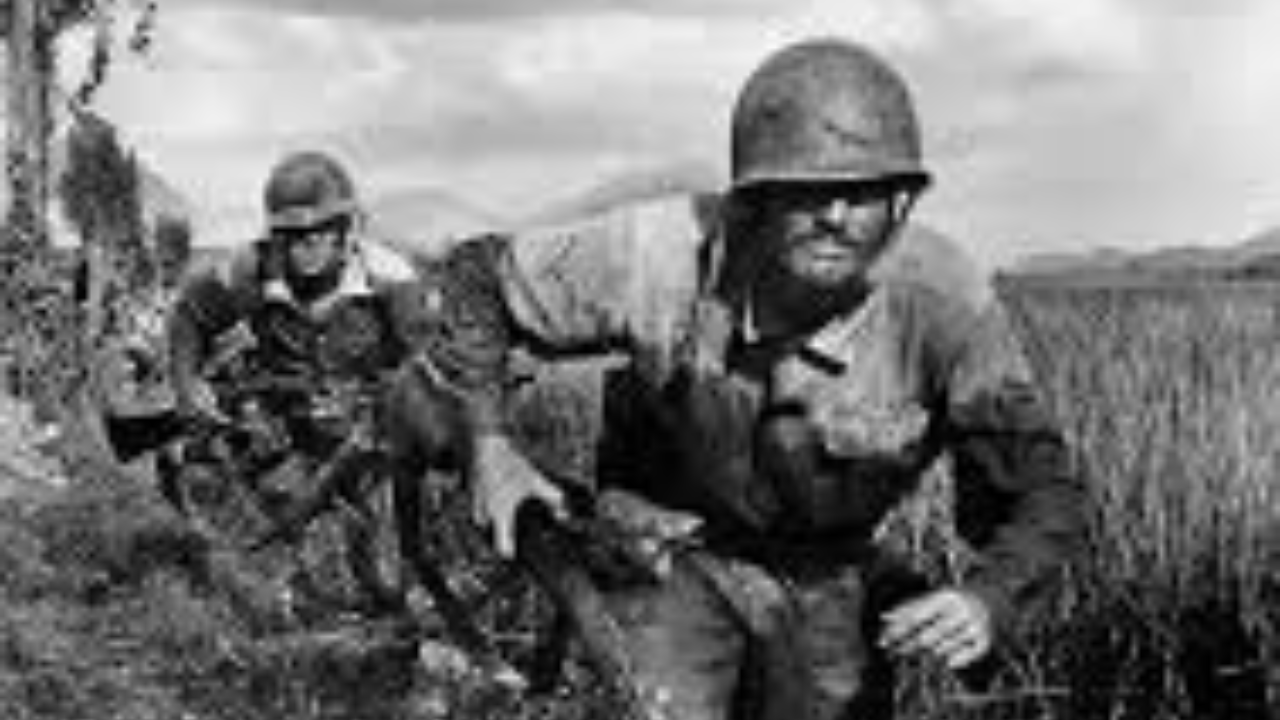
Seventeen years old. That’s how old Pvt. Joseph E. Boyd was when he shipped off to fight in a brutal conflict that many people today barely remember. He never made it home. Instead, his remains spent more than seventy years buried beneath a cold marker in Hawaii, identified only by a grim administrative code: Unknown X-1642.
History forgets the youngest soldiers first. But modern forensics doesn't give up that easily.
The Disappearance in the Korean Mountains
The winter of 1951 in South Korea was nothing short of punishing. Freezing winds whipped down from the mountains, and American forces were locked in fierce combat near Chigu-ri and Wonju. Boyd served with Company A, 1st Battalion, 9th Infantry Regiment, 2nd Infantry Division. During a routine patrol operation on January 25, 1951, he went missing.
In the chaotic retreat and advance of the Korean War, recovering fallen soldiers wasn't always possible. Boys like Boyd vanished into the frozen mud.
A local villager discovered human remains near Saemal a month later, in February 1951. A US Army recovery team retrieved them, shipping the bones across the sea to a temporary identification unit in Kokura, Japan. Forensic science back then was primitive by modern standards. Investigators couldn't pull a name from the bones. They gave up, tagged the remains as "Unknown X-1642 Tanggok," and shipped them off to the National Memorial Cemetery of the Pacific in Honolulu—better known as the Punchbowl.
For decades, his family back in Bear Creek, North Carolina, lived with an empty chair and a permanent question mark.
The Science That Brought Him Home
You might assume DNA testing solved this case overnight. It's more complicated than that.
In 2018, the Defense POW/MIA Accounting Agency (DPAA) launched a massive initiative to crack open old graves. They targeted 652 Korean War unknowns resting in the Punchbowl. Officials exhumed Unknown X-1642 in November 2023, shipping the remains to a specialized laboratory for a second look.
Scientists didn't just rely on a single test. They combined dental charts, anthropological measurements, and circumstantial evidence from unit records. Then came the heavy lifting: mitochondrial DNA analysis and mitochondrial genome sequencing performed by the Armed Forces Medical Examiner System.
When you match genetic markers against family reference samples collected over years of persistent outreach, the ghosts of the past start talking. On June 10, the DPAA officially accounted for Pvt. Joseph E. Boyd.
Why These Identifications Still Matter Today
Over 7,000 Americans remain missing from the Korean War. Critics sometimes ask why governments spend millions digging up graves from conflicts that ended over seventy years ago.
The answer is simple. Accountability has no expiration date.
When a kid lies about his age to enlist, dies in a foreign ditch, and spends a lifetime cataloged as a cold statistic, a societal debt remains unpaid. Resolving these cases matters for the families who passed down grief through generations without ever knowing where their uncle or brother actually lay.
Pvt. Boyd's journey concluded with a proper burial in Owings Mills, Maryland. A small rosette now sits next to his name on the Courts of the Missing in Honolulu, marking the end of an era where he was just an alphanumeric label.
The paperwork is finally closed. The boy from North Carolina finally has his name back.



