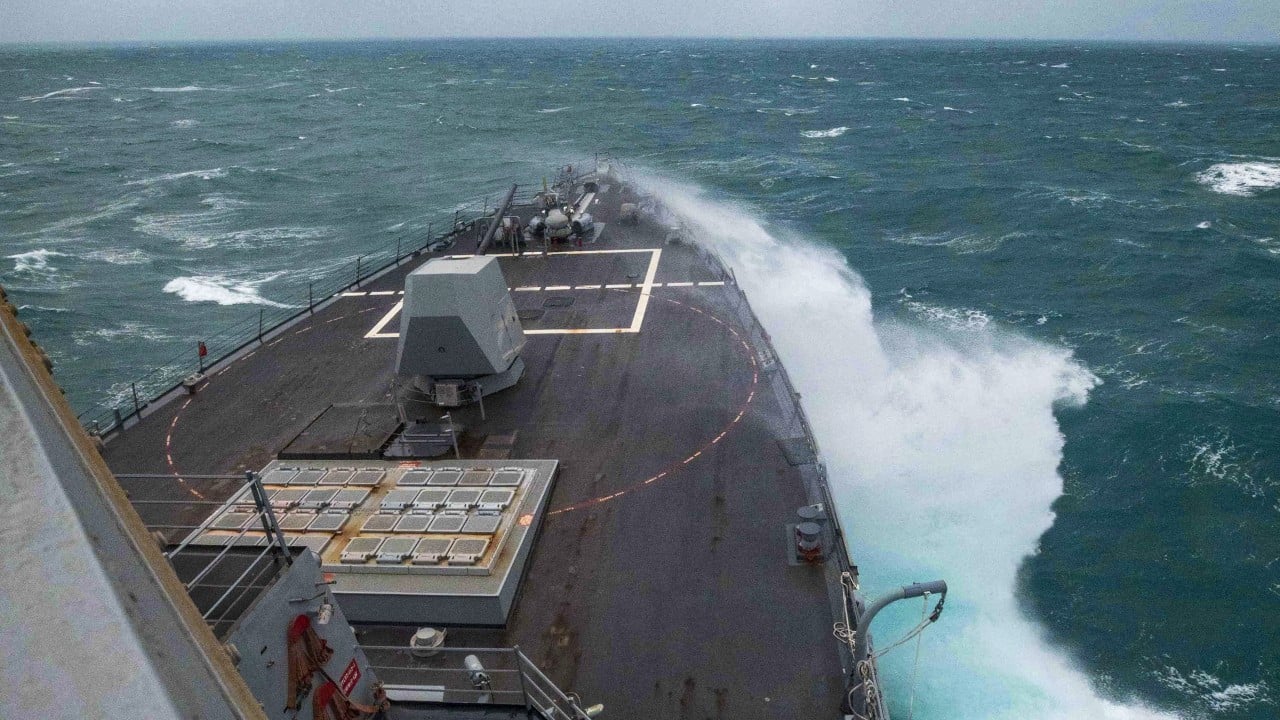
For decades, the Pentagon relied on a simple formula for projecting power across the Pacific: aircraft carriers and air wings operating from large regional bases. That playbook is dead. The People’s Liberation Army spent years perfecting an anti-access and area-denial network specifically engineered to push American ships and planes hundreds of miles away from China's coastline.
If a conflict erupts over Taiwan, traditional strike packages face a brutal reality. Massive airfields in Japan and Guam sit comfortably within range of the PLA's vast ballistic missile inventory. Carriers hovering near the first island chain risk becoming high-value targets for anti-ship cruise missiles and hypersonic weapons.
Washington had to adapt or lose the Pacific.
Enter the modern structural shifts within the US military, highlighted by specialized units designed to operate inside contested zones rather than just trying to fight their way through them. Instead of depending entirely on massive naval battlegroups or vulnerable runways, these new formations use mobility, long-range precision fires, and distributed positioning to turn the tables on Beijing's defensive architecture.
The Shift from Sea and Air Dominance to Land-Based Anti-Access
For a long time, the US Army played a secondary role in Pacific contingency planning. The Navy and Air Force owned the theater. But as the PLA built up its maritime strike capability, surface combatants found themselves facing an increasingly narrow margin for error.
Military planners realized that ground forces could do something ships couldn't: hide, disperse, and persist.
New commands equipped with multi-domain task forces bring long-range precision fires directly to the scattered geography of the Western Pacific. By positioning mobile launcher systems across allied island chains, the US military can establish its own counter-denial zone. You don't need a massive fixed base if you can pack up a missile battery, fire on moving naval targets, and relocate before enemy reconnaissance can spot you.
Why Mobility Trumps Mass in a Contested Strait
Fixed infrastructure is a liability in modern warfare. High-resolution commercial satellites and persistent drone surveillance mean that stationary targets have a short lifespan once shooting starts.
The strategy behind these new Army units relies on decentralization. Dispersing launchers across hundreds of islands makes it nearly impossible for an adversary to neutralize the threat with a single volley of strikes. If the PLA wants to clear a path for an amphibious assault across the Taiwan Strait, they have to hunt down dozens of mobile, hidden units scattered across rugged terrain.
That changes the math of deterrence. Beijing's planners must account for unpredictable vectors of fire coming from unexpected land locations, complicating any timeline for a cross-strait invasion.
The Reality of Magazine Depth and Logistics
Hardware gets the headlines, but logistics win wars. One of the quietest crises in modern defense planning is magazine depth. High-end interceptors and long-range anti-ship missiles are expensive and difficult to manufacture in volume.
During a sustained crisis in the Taiwan Strait, consumption rates will skyrocket in days. Fielding new units is pointless if they run out of ammunition after the first engagement. The Pentagon's recent push toward multi-billion-dollar production contracts for weapons like the Standard Missile series reflects an urgent scramble to build the industrial capacity required for a protracted high-end fight.
Furthermore, keeping these forward-deployed units supplied under constant electronic jamming, cyber attacks, and missile threats requires a completely different logistics posture. Traditional supply chains will collapse under heavy fire. Resupply efforts must rely on smaller, commercial-style vessels, autonomous transport drones, and prepositioned caches hidden throughout the region.
What Comes Next for Pacific Deterrence
Building specialized units is just the first step. The real test lies in allied integration and continuous rotational presence. Countries like Japan and the Philippines find themselves directly in the crosshairs of regional tensions, making their cooperation indispensable for any distributed defense concept.
The competition in the Taiwan Strait isn't about matching ship for ship or missile for missile. It's about imposing unacceptable costs on an aggressor while preserving the flexibility to fight and win under degraded conditions. As these new formations continue to test their capabilities in Pacific exercises, the margin for a swift, unopposed cross-strait operation shrinks significantly.