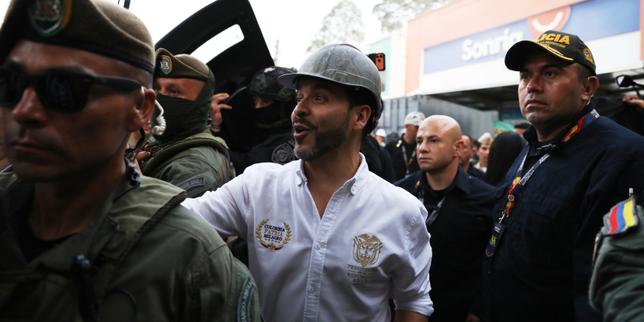
Colombia’s security strategy has shifted dramatically. President Abelardo de la Espriella recently confirmed that a military airstrike in the country's southwest—straddling the Cauca and Nariño departments—killed nine members of the National Liberation Army (ELN), including a high-ranking commander.
This offensive marks a sharp escalation in Bogotá's approach to domestic armed groups. If you've been following South American geopolitics, you know that peace talks and containment strategies used to dominate the conversation. Today, hardline military action is back on the table.
The Strike in the Southwest
The joint military operation targeted an ELN camp belonging to the South-West War Front. According to government reports, the early morning bombardment caught the insurgent group off guard.
President de la Espriella’s administration has made no secret of its security posture since taking power. This operation stands out as part of a broader wave of military offensives authorized against guerrilla camps. Preliminary figures indicate that multiple government-ordered airstrikes since August have resulted in significant casualties, drawing intense scrutiny from human rights advocates and international observers alike.
Targeting rebel strongholds in regions like Cauca and Nariño is notoriously difficult. The rugged terrain provides natural cover, making ground invasions slow and perilous. Airpower changes that calculation, though it brings massive political and humanitarian risks.
Why the ELN Remains a Central Security Puzzle
The ELN is Colombia's last active major guerrilla organization. Decades of negotiations with successive administrations have yielded little lasting peace. Truces break down, command structures fragment, and local populations bear the brunt of the violence.
When a government resorts to heavy bombing campaigns, it sends a clear message. It signals that patience with protracted dialogue has run out. But history shows that military strikes alone rarely eradicate insurgency. They often prompt retaliatory attacks, deepen humanitarian crises in rural sectors, and complicate the reintegration of former combatants who are trying to build civilian lives through legal economic ventures.
Critics argue that renewed airstrikes risk repeating past mistakes, pointing to civilian casualties reported in previous operations. Supporters counter that state authority must be reestablished by force in lawless territories controlled by armed factions.
What Comes Next for Colombia's Security Policy
The political stakes in Colombia are climbing. As the government presses forward with its hardline approach, public opinion remains deeply divided. Massive street demonstrations in recent weeks reflect a nation torn between the promise of security through strength and the fear of a return to all-out internal conflict.
Expect the administration to maintain its aggressive posture in the short term. Whether this strategy will crush the ELN's operational capacity or simply drive the insurgency further underground remains the defining question for Colombia's immediate future.



