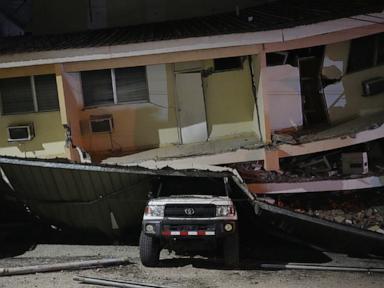
Thousands of residents across rural and central Panama spent anxious nights sleeping on pavements and under makeshift tents as a violent series of aftershocks continued to rattle communities following two major earthquakes. The seismic event, headlined by a powerful 7.7-magnitude tremor and a subsequent 6.6-magnitude jolt, struck shallowly near Pitaloza Arriba in the Herrera province, leaving historical structures damaged and triggering nationwide evacuations.
Seismologists at the University of Panama recorded more than 80 aftershocks rolling through the region, with several measuring between 5.2 and 5.8 in magnitude. For families whose homes cracked open or partially collapsed, returning indoors feels far too dangerous. People have set up camp on streets, plazas, and open fields, waiting anxiously for government safety assessments and structural clearances.
The Epicenter of Destruction
Damage hit central provinces hard, particularly Herrera, Los Santos, and Veraguas. In La Villa de Los Santos, a historic colonial community, structural failures included a collapsed section of a revered historical Catholic church and multiple residential buildings. In Penonome, a bell tower crumbled down, causing injuries and trapping vehicles under debris.
President José Raúl Mulino declared the crisis a major disaster, while international aid and response teams mobilize to assist the affected provinces. Power outages rippled across six different provinces, cutting off communication lines and complicating rescue efforts in remote areas. Tocumen International Airport also temporarily halted operations for safety checks before resuming flights.
Living on Fault Lines
Panama sits squarely along the Pacific Ring of Fire, an active seismic belt known for frequent tectonic and volcanic activity. Yet, residents note that the sheer intensity and shallow depth of this specific event—pegged at just 10 kilometers underground—made it uniquely terrifying. Older residents have shared accounts noting they had never felt anything remotely comparable in nearly a century of living in the region.
As aftershocks persist, civil protection agencies continue to urge caution. Residents in damaged zones are advised to stay clear of compromised structures until engineers finish full safety inspections. For now, families continue to watch the horizon from outdoor cots and street corners, bracing for the next tremor.



