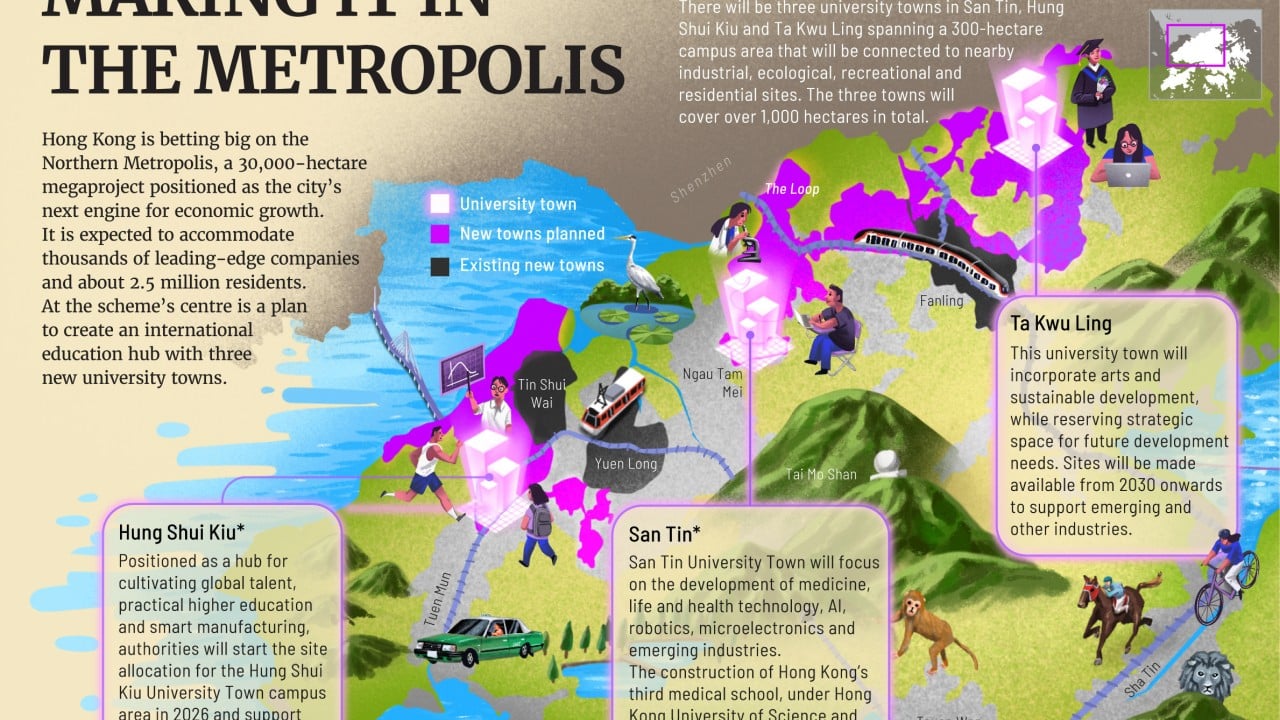
You have probably heard the buzzwords. A 30,000-hectare megaproject. The next economic engine. A massive urban transformation designed to reshape how millions live, work, and commute near the border. But behind the glossy government briefings and policy addresses, the reality of Hong Kong’s Northern Metropolis is far more complicated than a simple real estate pitch.
Most commentary treats this massive undertaking as a straightforward construction job. Pour concrete, lay down rail tracks, wait for tenants to arrive. That misses the entire point. The Northern Metropolis is a structural bet on cross-border integration with Shenzhen and the broader Greater Bay Area. It is an attempt to rewrite the economic gravity of a city historically anchored strictly to Victoria Harbour.
Let us look at what is actually happening on the ground.
The Land Challenge Everyone Ignores
Building across 30,000 hectares sounds straightforward on paper. In practice, Hong Kong faces a notorious bottleneck of red tape, complex land ownership patterns, and environmental assessments. Areas like the Hung Shui Kiu and Ha Tsuen new development zones require delicate coordination between private landowners, indigenous villagers, and government planners.
You cannot just bulldoze history. Compensation disputes drag on for years. Infrastructure timelines stretch past initial projections. If you are expecting overnight miracles, you will be deeply disappointed. The project spans decades, not election cycles. It requires patience that modern real estate speculators rarely possess.
Integration Versus Identity
The geopolitical angle is what truly defines this project, yet it is rarely discussed honestly. The Northern Metropolis sits right on the boundary with Shenzhen. The underlying vision is a seamless flow of talent, capital, and technology between Hong Kong's legal-financial framework and the mainland's hardware powerhouse.
Critics worry about losing what makes Hong Kong unique. Supporters argue that survival demands integration. The truth sits in the messy middle. Young entrepreneurs do not care about bureaucratic boundaries; they care about rent prices, transport links, and market access. When a tech worker can live in a newly minted district and commute across the border in twenty minutes, the old mental maps of the city dissolve.
Where the Real Opportunities Are
If you are looking at the Northern Metropolis as a place to buy a flat and flip it next year, stop. That game belongs to a different era. The real value lies in logistics, cross-border biotech research, advanced manufacturing tech, and education hubs.
Look at the San Tin Technopole. This is supposed to house innovation and technology industries. It needs actual companies, researchers, and venture capital to thrive, not just empty office blocks. Government subsidies can jump-start construction, but sustained economic momentum requires private-sector buy-in. Watch which corporations actually set up physical headquarters there versus those just issuing polite press releases.
What Comes Next
The Northern Metropolis is moving from blueprint to reality, but the path is rocky. Costs will overrun. Traffic bottlenecks will frustrate early residents. Political friction will flare up.
Keep your eyes on actual tenant acquisition rates and transport completion milestones rather than polished promotional videos. Pay attention to how small businesses adapt to the new geography. Success will not be measured by the scale of the concrete poured, but by whether ordinary people can actually build a thriving, affordable life there without feeling marooned at the edge of the territory.



