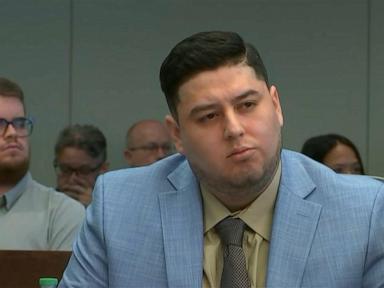
Cold cases haunt communities for a reason. They represent a glaring gap where justice stalled out, leaving families waiting decades for answers. When the trial over the 2012 killing of University of North Carolina student Faith Hedgepeth finally reached its closing arguments, it laid bare the grueling realities of modern forensic investigations. Fourteen years is a long time to wait for closure.
If you've followed this case from the initial shock in Chapel Hill to the courtroom showdown, you know it's never been a simple narrative. Faith was just 19 years old when her roommates discovered her body in an off-campus apartment, beaten to death with a liquor bottle. The crime scene was brutal, chaotic, and saturated with biological evidence that baffled investigators for nearly a decade.
The Breakthrough That Changed Everything
For years, the investigation limped along on rumors, speculation, and dead-end tips. Local law enforcement hit walls that standard police work simply couldn't scale. Then came the modern application of familial DNA testing and advanced forensic profiling. Investigators used genetic genealogy to trace distant relatives, eventually pointing straight to Miguel Salguero-Olivares, who was arrested in 2021.
In the courtroom, prosecutors presented genetic evidence that staggered the jury. State crime lab analysts testified that DNA swabbed from Faith's body and a rum bottle at the scene carried probabilities in the septillions and tredecillions of matching Salguero-Olivares. Critics of the criminal justice system often question how DNA holds up over time, but numbers like that are hard to wave away with a simple courtroom objection.
Why the Defense Still Had Teeth
Despite staggering genetic matches, trials aren't won on science alone. The defense team hammered away at police missteps from the early days of the investigation. They pointed out that local authorities lost potential blood evidence, failed to secure parts of the apartment properly during the initial chaotic hours, and allowed too many officers to tramp through the crime scene before forensics teams arrived.
You have to look at how investigative standards have evolved since 2012. Back then, protocols weren't nearly as airtight as they are today. Defense attorneys used those early stumbles to sow doubt, questioning whether the physical evidence was compromised or misinterpreted. They pushed back against the state's narrative of a premeditated stranger assault, forcing the jury to weigh sloppy initial police work against overwhelming modern laboratory results.
What This Means for Future Investigations
This trial serves as a masterclass in how cold cases are revived, but it also highlights the fragile nature of early police responses. When a crime scene is contaminated or evidence is mishandled in the first 48 hours, prosecutors spend years fighting an uphill battle to prove their case beyond a reasonable doubt, even with twenty-first-century DNA technology on their side.
Cold case units across the country are watching this verdict closely. It proves that technological persistence can crack decades-old mysteries, but it also issues a stark warning to departments everywhere: secure your crime scenes correctly the first time, because science can only fix so many human errors.
If you want to understand how modern forensics interacts with aging evidence, look at the timeline of this case. Real justice requires both brilliant science and flawless execution from the very first officer on the scene.
Defense's Expert Shut Down in UNC Student Murder Case
The video above provides a closer look at the courtroom arguments surrounding forensic evidence in the trial.



