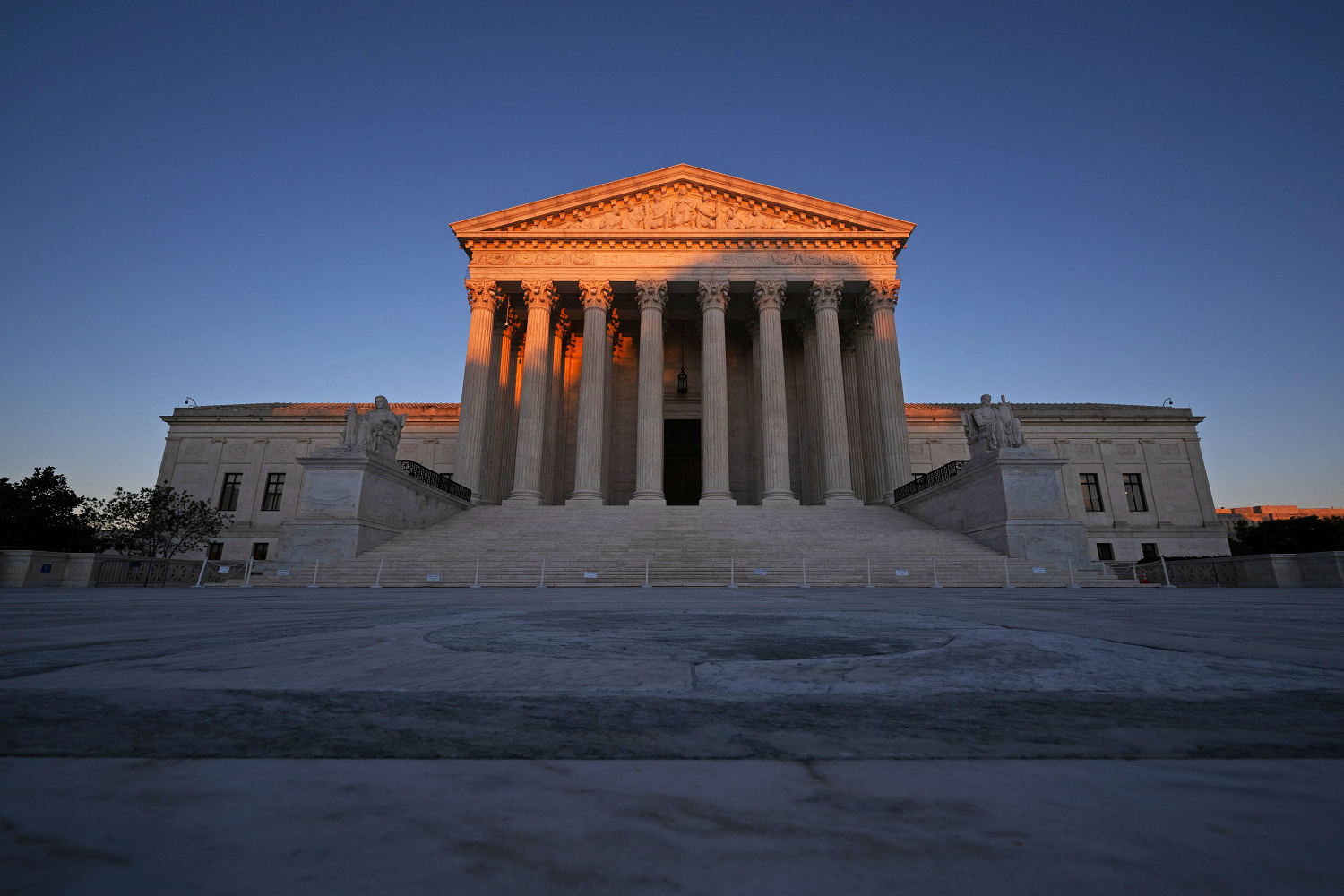
The debate over race and school admissions didn't end with the Supreme Court's landmark 2023 college ruling. Now, the high court is stepping into a messy battle over public school seats in suburban Maryland, and the outcome will impact districts nationwide.
The Supreme Court agreed to hear an appeal from the Association for Education Fairness, which is challenging selective admissions policies at STEM magnet schools in Montgomery County, Maryland. At issue is a lottery-based admissions system that critics argue was intentionally designed to boost Black and Latino student enrollment while squeezing out Asian American students.
If you think this is just a local squabble over middle school slots, look closer. This case sits right on the frontline of the post-affirmative action legal war.
How Montgomery County Changed the Rules
Before Covid-19, getting into Montgomery County’s elite STEM magnet middle schools required rigorous standardized testing and GPA benchmarks. Admissions were merit-based on paper.
In response to the pandemic and mounting pressure to diversify selective programs, the district scrapped the traditional entrance exam. Instead, administrators instituted a centralized lottery system. To factor in socioeconomic status without violating bans on explicit racial classifications, the system started ranking student performance by comparing test scores against family income levels within similar tiers.
School officials defended the change as a way to expand access and tear down barriers for historically underrepresented groups. But families pushing back saw a different motive entirely.
The Core Argument From Challengers
The Association for Education Fairness filed a lawsuit claiming that the new lottery framework violates the Fourteenth Amendment’s Equal Protection Clause. Their argument boils down to a sharp accusation: when a district uses proxies to achieve racial balancing, it's just practicing discrimination by another name.
Lawyers representing the parents put it bluntly in court filings. They argue that the 4th US Circuit Court of Appeals erred by permitting racial discrimination to slide as long as it happens through a socioeconomic proxy.
Lower courts didn't buy the discrimination claims. US District Judge Paula Xinis tossed out the lawsuit in 2022, pointing out that the percentage of admitted Asian American students actually exceeded their overall representation among applicants. The Richmond-based 4th Circuit upheld that dismissal, ruling that the policy didn't plausibly cause a disparate impact.
Now, the Supreme Court wants to take a fresh look.
Why This Case Matters Beyond Maryland
Following the 2023 ruling that dismantled race-conscious admissions at Harvard and the University of North Carolina, legal watchdogs predicted an immediate wave of secondary lawsuits. School districts across the country have scrambled to find legal ways to maintain diverse classrooms without triggering constitutional alarms.
If districts can use complex socioeconomic weighting or lottery proxies to steer outcomes, the high court's affirmative action ban loses its teeth. Conversely, if the justices rule against Montgomery County, every single K-12 public school district using alternative admissions models will need to rewrite their rulebooks immediately.
Parents, local school boards, and civil rights groups are watching closely because the definition of equal protection is once again up for grabs.
Take a hard look at your local district's admissions policies if you have children in public schools. The legal ground beneath public education is shifting fast, and this upcoming Supreme Court ruling will draw a hard line that districts cannot cross.
Supreme Court to hear a new case on race and school admissions, this time in Maryland
This article provides an in-depth look at the Supreme Court's decision to review the Montgomery County magnet school admissions case and its broader legal implications.



