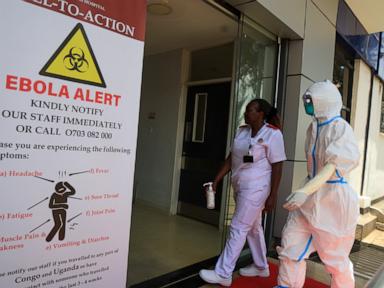
Public health scares move fast. Kenya’s Ministry of Health just confirmed its second Ebola case, a 39-year-old man who is a close relative of the country's first imported patient.
If you've been following the massive outbreak centered in the Democratic Republic of Congo, this development doesn't come as a total shock, but it highlights just how difficult containment really is once a virus crosses international borders. The patient didn't slip through the cracks of the medical response; he was already locked down in quarantine when symptoms appeared on Tuesday. That single detail makes all the difference in stopping an uncontrolled outbreak.
How the Chain of Transmission Unfolded
To understand why health officials aren't hitting the panic button just yet, you have to look at the timeline. The first patient, a 40-year-old Kenyan living in Congo, fell ill and sought care at multiple local health facilities. He traveled through three separate Ebola-affected provinces before crossing into neighboring Uganda on October 1. From there, he caught a flight to Nairobi on October 3.
A family member picked him up at the airport and drove him straight to a hospital. Unfortunately, it was too late to save him. He tested positive for the virus and died on October 5. Additional details on this are explored by NBC News.
Public health teams moved fast after that fatality. They tracked down about 128 close contacts linked to the first case and slapped quarantine orders on 108 of them. Five other contacts crossed international borders, prompting alerts to foreign health authorities. The newly confirmed second patient was sitting right inside that quarantined group.
Catching the infection early changes the survival math completely. The ministry noted that isolating him immediately gives him a much stronger shot at recovery, while keeping the general public safe from accidental exposure.
Regional Pressures and Border Vulnerabilities
This entire situation puts a massive spotlight on border screening across East Africa. The first patient managed to travel by road into Uganda despite borders officially closing back in May. That loophole exposes real vulnerabilities in regional monitoring systems, especially when people are desperate to seek medical care or return home during a health crisis.
Kenya is now the fourth country to report a case tied to the broader Congo outbreak, which is shaping up to be one of the largest on record. We are talking about more than 8,000 cases and over 4,000 deaths in total. While Uganda dealt with a smaller cluster of 20 cases and two deaths earlier this year before being declared Ebola-free in August, this new cross-border spillover proves that vigilance can't slip for a second.
Health ministries are doubling down on airport and border surveillance, urging anyone with suspicious symptoms to use emergency hotlines immediately.
What Actually Happens Next
The risk of a widespread domestic outbreak in Kenya remains low because the contact tracing net caught this second patient before he could move around the community. Officials insist there is no evidence of wider community spread.
You don't need to panic, but you do need to understand how this virus operates. Ebola spreads purely through direct contact with infected bodily fluids—not through casual contact or airborne transmission. Fever, vomiting, and severe fatigue are the early red flags that health workers are watching for across every transit hub in the region.
Check local updates if you're traveling through East Africa, follow official guidance from public health agencies, and keep an eye on how quarantine protocols hold up over the next fourteen days.



