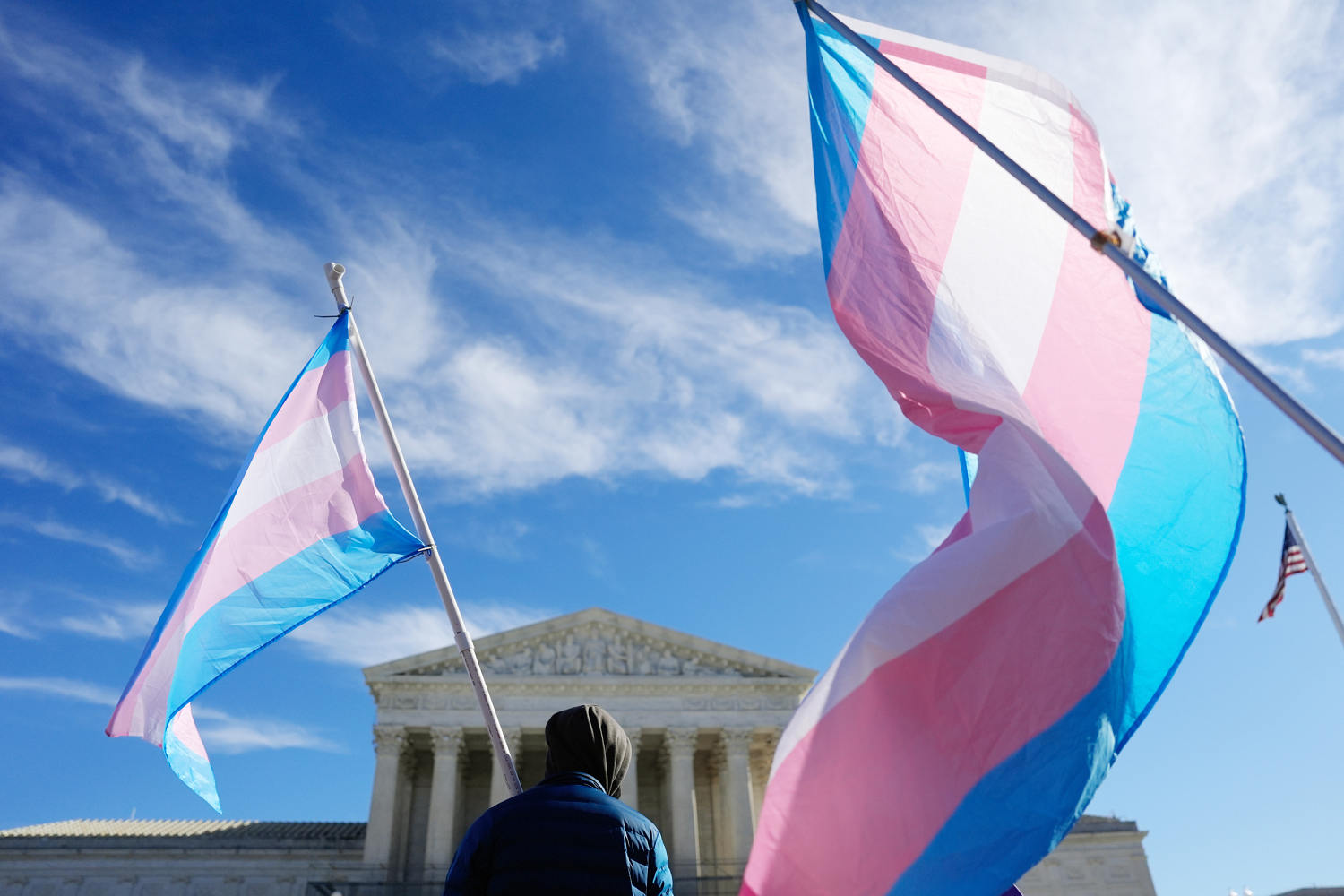
When the highest court in the land hands down an emergency order, everybody holds their breath. That happened again when the Supreme Court refused to rescue a sweeping Trump administration transgender prison policy that sought to strip away hormone therapy and medical care from incarcerated individuals. The justices left a lower court's freeze firmly intact, meaning roughly six hundred inmates currently receiving gender-affirming treatments won't lose their access overnight.
Honestly, this legal fight is about much more than prison bureaucracy. It cuts straight to the heart of constitutional protections, Eighth Amendment rights, and how the federal government handles medical decisions for marginalized populations behind bars. If you've been following the barrage of executive orders and judicial clashes defining this era, this Supreme Court showdown is one of the most consequential yet quietest battles playing out in the federal docket. Let's break down what actually happened, why the administration pushed this policy so hard, and what the courts are signaling for the future.
The Core Conflict Behind the Bureau of Prisons Directive
Prisons aren't known for top-tier healthcare. Anyone who has spent five minutes studying the American correctional system knows that providing basic medical treatment is already an uphill battle. But federal prisons have maintained a specific policy regarding gender-affirming care for three decades. For thirty years, hormone therapy and psychological support weren't viewed as radical experiments. They were treated as standard clinical responses to diagnosed gender dysphoria.
That stability shattered when a presidential executive order targeted these exact interventions. The Federal Bureau of Prisons quickly pivoted, drafting new rules to ban hormone therapy, surgical options, and social accommodations like wigs or gender-specific clothing items in male and female facilities alike. The administration argued that these treatments created security risks, administrative burdens, and were no longer justifiable under federal correctional standards.
Except the government ran into a massive evidentiary wall. When attorneys representing transgender inmates challenged the policy in court, the administration struggled to produce actual proof that thirty years of providing hormone therapy had ever sparked security crises or operational failures. Without tangible data backing up the security claims, the rationale began to look less like a practical prison management decision and more like a top-down ideological mandate.
How U.S. District Judge Royce Lamberth Blocked the Policy
You can't just rewrite agency rules overnight without following proper administrative procedures. That is basically what federal courts keep telling the current administration. U.S. District Judge Royce Lamberth stepped into the center of this firestorm and slammed the brakes on the Bureau of Prisons directive.
Judge Lamberth isn't some liberal activist fresh out of law school. He is a veteran jurist appointed by Ronald Reagan decades ago. When a Reagan-appointed judge looks at an executive agency's abrupt reversal and calls the rules "reverse engineered" simply to satisfy a political executive order, people pay attention. Lamberth issued an injunction keeping the care flowing, pointing out an undeniable reality backed by major medical associations: untreated gender dysphoria triggers severe anxiety, depression, and alarmingly high rates of suicidal ideation.
The Justice Department wasn't going to surrender easily. Solicitor General D. John Sauer took the fight all the way up to the Supreme Court, filing an emergency application to lift the lower court's freeze. The argument was straightforward: lower court judges shouldn't tie the executive branch's hands when it comes to running federal correctional facilities according to presidential priorities.
Inside the Supreme Court Action and Shadow Docket Dynamics
The Supreme Court didn't take the bait. In an unsigned, two-sentence order, the justices denied the administration's emergency request to let the policy take effect immediately while the broader litigation grinds through the appeals process.
Two conservative members of the court made their stance explicit. Justice Clarence Thomas and Justice Samuel Alito indicated they would have granted the administration's application, allowing the restrictions to go in effect right away. But they didn't have the necessary votes from their colleagues to pull it off.
This outcome mirrors a fascinating pattern we've seen on other hot-button issues. While the conservative-majority court has recently given green lights to state-level restrictions on transgender youth medical care and athletic participation, federal prison administration operates under a different set of statutory constraints and Eighth Amendment liability questions. Stopping ongoing medical treatment for inmates who have relied on it for years opens the door to immediate, catastrophic harm lawsuits under constitutional cruel and unusual punishment clauses. Under established legal doctrine, prison officials cannot display deliberate indifference to serious medical needs. When doctors have prescribed a treatment for decades, yanking it away without a clinical justification creates massive legal exposure for the government.
The Human Numbers and Real-World Impact
Numbers tell the real story here. Across the entire federal prison system and immigration detention centers, roughly two thousand inmates identify as transgender. Out of that population, approximately six hundred individuals were actively receiving hormone therapy.
Cutting off hormone therapy isn't like stopping a daily vitamin. Abruptly withdrawing these medications causes severe physiological shocks, emotional destabilization, and profound mental health deterioration. Prison doctors know this. Medical boards know this. Mainstream medical organizations across the United States agree that abruptly halting established gender-affirming care creates immediate clinical dangers.
When you look at the day-to-day reality inside a maximum-security federal pen or a medium-security facility, medical continuity is already fragile. Introducing a blanket ban on established treatments doesn't just eliminate a specific type of care; it creates a combustible environment where vulnerable inmates face severe psychological crises. The administration claimed mental health therapy would still be offered, but cutting off the foundational medical treatment while keeping counseling felt to many observers like offering a bandage for a broken bone.
Why This Transgender Prison Policy Fight Is Far From Over
Don't mistake this Supreme Court order for a permanent victory for transgender inmate rights. The justices merely refused to intervene on an emergency, temporary basis while the case winds its way through the lower courts.
The U.S. Court of Appeals for the District of Columbia Circuit previously declined to lift the lower court's freeze, and now the case will return to the merits phase. Lawyers on both sides are preparing for a long, grinding legal battle that could eventually land back on the Supreme Court's regular docket for full briefing and oral argument.
Administrations change, but administrative law remains stubbornly procedural. If the government wants to upend decades-old correctional medical standards, courts demand rigorous adherence to federal rulemaking statutes rather than swift administrative pivots driven by executive pressure.
If you are following constitutional law or corrections policy, watch how the lower courts handle the administrative procedure act claims. The real battle won't just be about ideology; it will be about whether the government followed the boring, technical rules required to change federal policy.
Take practical note of how judicial scrutiny works in these high-stakes administrative disputes. Courts demand evidence, not just executive preference. Until the final judgment is handed down, the hundreds of federal inmates receiving treatment keep their care, but the broader war over federal correctional policy continues to march forward. Track the upcoming appellate briefs in the D.C. Circuit and monitor how district courts evaluate agency justifications against established clinical standards. That is where the actual outcome of this dispute will be decided.



