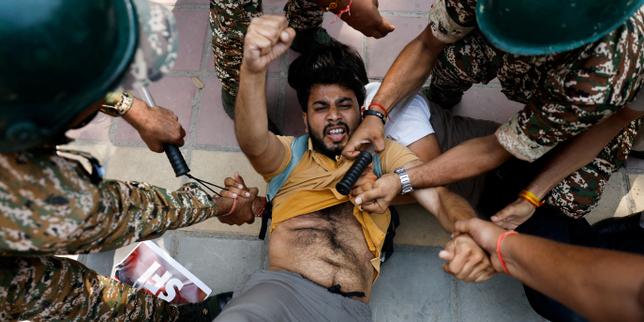
Thousands of arrests won't silence a generation that has already tasted political impact. New Delhi looked like an armed camp on Saturday, October 10, completely locked down by authorities terrified of a massive youth-led demonstration. Prime Minister Narendra Modi has chosen a heavy-handed playbook, swapping dialogue for razor wire and mass detentions. It's a high-stakes gamble that exposes deep anxiety within the ruling establishment.
For months, Indian politics has experienced tectonic shifts driven primarily by Gen Z and student networks. What started as online organization quickly transformed into massive street mobilization, catching the nationalist government off guard. When young citizens mobilized against entrenched institutional issues and disputed exam integrity, the administration initially stumbled, even facing high-profile cabinet casualties.
Now, the response has hardened into raw state power.
Why the Crackdown Tells a Story of Vulnerability
Iron-fisted control rarely signals strength. When a government feels compelled to lock down an entire capital city to block student protesters, it shows profound fear of youth mobilization. The administration wants to project an image of unshakeable authority, but the reality on the ground points to a widening chasm between an aging political leadership and a digitally connected, restless demographic.
India's median age hovers around 28 years old. Millions enter the job market every year facing fierce competition, economic uncertainty, and systemic bottlenecks. When these young voices demand systemic accountability, meeting them with batons and paddy wagons doesn't solve the underlying structural grievances. It merely radicalizes a demographic that already feels ignored.
The Cost of Silencing Gen Z
History suggests that suppressing youth movements rarely works long-term. You can barricade streets, suspend internet access, and haul thousands off to holding facilities, but you cannot arrest an idea or erase economic desperation.
- Erosion of Democratic Norms: Heavy policing of peaceful assembly normalizes authoritarian measures.
- Deepening Alienation: Alienating young voters alienates the future of the nation's workforce and electorate.
- Amplified Resentment: Every arrest creates dozens of new sympathizers among families and peer groups.
Modi built his political brand on promises of economic modernization, digital expansion, and dynamic opportunities for the young. That narrative frays rapidly when police vans replace open forums and town halls.
What Happens Next
The standoff in New Delhi marks a pivotal turning point for contemporary Indian politics. If the administration continues down this path of criminalizing dissent, political friction will only intensify underground and online.
You cannot govern a modern superpower by treating its youth as a security threat. Modi faces a stark choice: pivot back toward genuine political engagement or double down on an unsustainable cycle of repression. The streets of the capital are quiet today under heavy guard, but the pressure underneath keeps building.
Stop pretending that administrative force equates to stability. Real political durability requires listening to the people you lead, especially the ones inheriting tomorrow.
Watch a detailed analysis of the youth protests and political tensions in India through this video coverage on student demonstrations, which explores the roots of student anger against government policies.
http://googleusercontent.com/youtube_content/1



