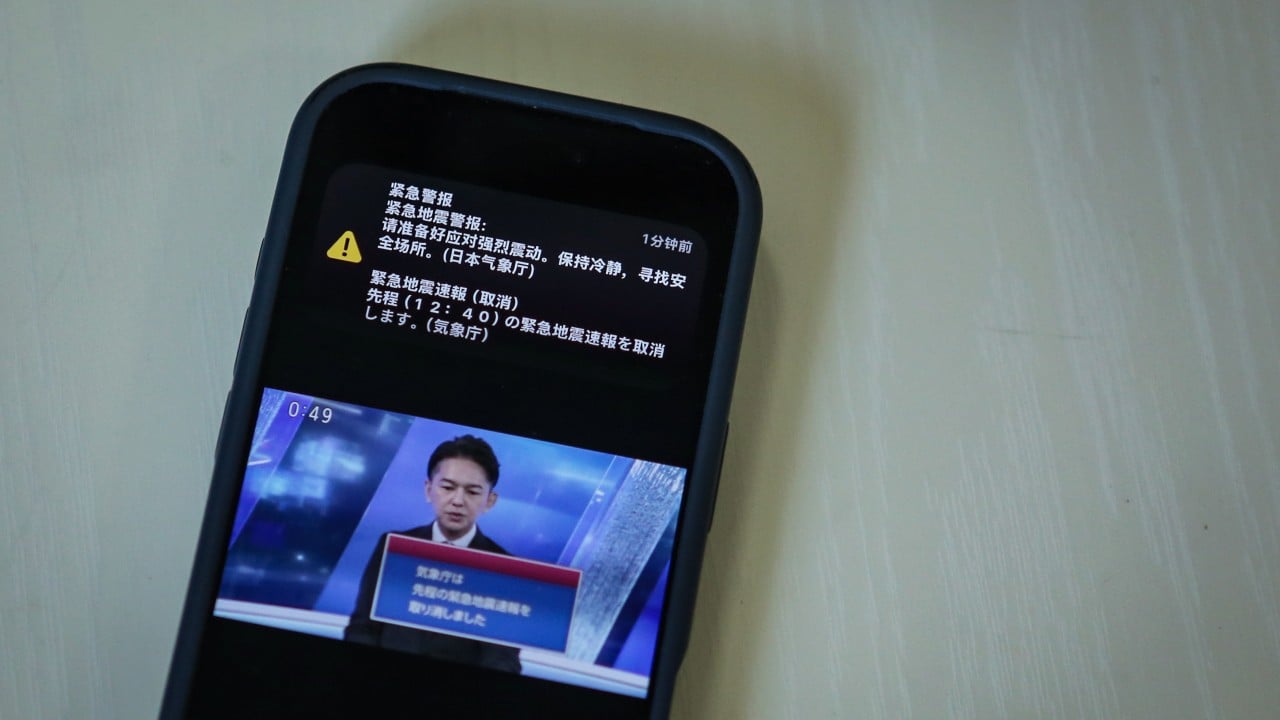
Every smartphone across northern and central Japan lit up at once. The audio was unmistakable, a shrill, panic-inducing chime that commands immediate terror. The screen flashed an emergency earthquake bulletin from the Japan Meteorological Agency, projecting a magnitude 9.9 cataclysm.
For millions of residents and commuters, time compressed into a terrifying choice. A magnitude 9.9 event sits far beyond anything humans have ever measured. The monster 1960 Chile earthquake topped out at 9.5, reshaping coastlines and tearing apart entire regions. A 9.9 would be nearly thirty times more powerful. It would tear up the earth's crust on an unprecedented scale. People on high-speed bullet trains locked inside tunnels braced for structural collapse. Students in classrooms locked eyes in sheer disbelief.
Then, eight minutes later, the cancellation came.
The apocalypse was canceled because it had never been real.
Automated processing systems had misread a moderate magnitude 6.9 tremor near Russia's Kamchatka Peninsula, wildly miscalculating its scale and proximity. While the system scrambled, high-speed rail lines halted, government budget committees suspended sessions, and collective dread gripped a nation already hyper-vigilant about seismic disaster.
False alarms carry a heavy psychological toll. When algorithms cry wolf on a massive scale, public trust frays.
The High Cost of Erroneous Panic
Technology is supposed to keep us safe, but automated early-warning infrastructure relies on rapid math that can occasionally spiral out of control. When an offshore tremor hits, sensors feed data into algorithms that must decide in fractions of a second whether to warn the public. Hesitate, and buildings crumble before the alert arrives. Move too fast, and ghosts in the machine invent numbers that defy geological reality.
A magnitude 9.9 earthquake is physically near the absolute limit of what tectonic faults on Earth can possibly generate. Plate boundaries simply cannot store and release that much contiguous energy without fracturing prematurely. Yet the automated systems didn't care about geological limits. They ingested faulty data points from outer monitoring perimeters, panicked, and broadcasted an existential threat straight into millions of pockets.
The immediate fallout went far beyond digital red faces. Train operators slammed on emergency brakes, freezing transit networks. Top officials abandoned legislative duties to sprint into crisis management briefings. More damaging, however, is the erosion of behavioral response.
The Danger of Desensitization
If you cry wolf often enough, people stop running. Earthquake preparedness experts have worried about warning fatigue for years. When frequent alerts turn out to be harmless ghosts, human nature takes over. People start ignoring the chime. They finish their coffee instead of dropping under a desk. They assume the screen is lying.
Living in one of the most seismically active zones on the planet means citizens must maintain a delicate balance between constant readiness and psychological burnout. You cannot spend every waking hour paralyzed by the prospect of total destruction. Societies adapt by normalizing risk. But when a false alarm scales up to an impossible 9.9 magnitude, it shakes more than just nerves; it strains the credibility of the entire safety apparatus.
Following the swift retraction, meteorological officials bowed in apology, promising algorithmic overhauls and tighter calibration of perimeter monitoring stations. They know that rebuilding technical accuracy is easy compared to restoring public confidence.
Disaster preparedness requires living with ghosts. We rely on invisible networks of sensors and servers to watch the earth beneath our feet, knowing full well that technology will occasionally misfire. The next time the phone screeches a warning, you'll still feel that cold drop in your stomach. You'll still have to decide whether to run. That is the price of living on a restless planet.



