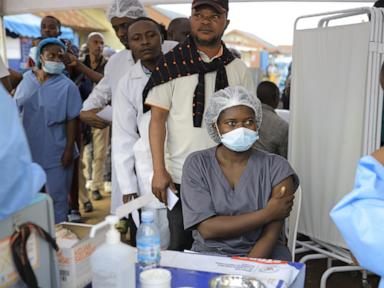
Emergencies expose systems. They test logistics, medical infrastructure, and, most critically, trust. When an epidemic hits, money flows quickly. Accountability usually crawls behind.
Right now, the math doesn't add up in the Democratic Republic of the Congo.
According to the Africa Centres for Disease Control and Prevention, international donors disbursed roughly $962 million for the recent Ebola response. Yet, during a joint verification audit with Congolese health authorities, officials could only trace about $200 million of it to the organizations actually doing the work on the ground.
That leaves more than $700 million sitting in a financial black hole.
Dr. Jean Kaseya, the head of Africa CDC, didn't mince words during a press briefing in Kinshasa. He highlighted that fewer than thirty percent of the designated implementing partners even showed up to account for the cash they received.
Transparency isn't a bureaucratic luxury. It's a matter of survival.
The Disconnect Between Donors and Delivery
How do hundreds of millions of dollars simply vanish from paper trails? The reality is messy. Emergency funding rarely moves through a single, clean pipeline.
Donors send money to international organizations, which pass it to local NGOs, which hire contractors, sub-contractors, and local handlers. Every layer introduces administrative friction, poor record-keeping, and sometimes, outright corruption.
When audit time arrives, the trail goes cold.
Crucially, experts note that un-reconciled funds do not automatically mean millions were stolen or embezzled. Often, weak reporting infrastructure, delayed bookkeeping, and poor communication channels mean money was spent on legitimate operational costs, but the paper receipts were never filed.
Either way, the result is identical: confusion, lost credibility, and dangerous gaps in public health responses.
Why This Crisis Stings So Deeply
The DRC has dealt with repeated outbreaks over decades. The country knows the drill. Communities know the drill. Yet systemic financial opacity continues to plague health interventions.
Mistrust is the silent vector in any epidemic. When local populations see international money pouring in while clinics lack basic personal protective equipment, cynicism festers. Rumors spread. Communities push back against health workers.
When funding opacity hits the headlines, it damages public trust. People start asking where the resources are going. If residents believe funds are evaporating into administrative bloat or corrupt hands, they stop cooperating with contact tracers and vaccination campaigns.
That resistance costs lives.
The Crackdown and What Happens Next
Africa CDC is drawing a hard line. Kaseya warned that non-compliant organizations failing to account for their expenditures could face severe consequences. The penalties include potential blacklisting across the continent and being permanently barred from operating within the DRC.
It is a long-overdue stance. Emergency health funds cannot remain a wild west of unchecked spending.
Moving forward, donors must demand rigorous, real-time auditing before writing the next blank check. Implementing partners should operate under strict open-book policies from day one, not after the crisis peaks.
Lives depend on the medicine. The credibility of global health agencies depends on the ledger.
The video above provides additional context on the Africa CDC investigation into the missing funds.
Accountability cannot wait until the outbreak ends. If global health organizations want communities to trust them, they need to start by proving where every single dollar went. Stop treating financial tracking as an afterthought. It's the foundation of public health.



