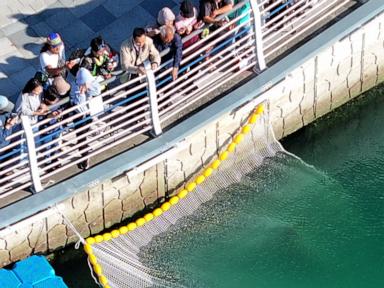
A massive dusky shark accidentally swam into an artificial canal in Busan, South Korea, and refused to leave for over a month.
People love a good spectacle. When a 3.5-meter (11.5-foot) female shark turned up in the North Port waterfront park back in mid-September 2026, it didn't spark immediate panic. Instead, it triggered a bizarre wave of national fascination. Locals affectionately named her Bukangi, after Bukhang (North Port). She even landed an honorary ambassador title from the city.
Over a million visitors flocked to the concrete banks to catch a glimpse. Officials tried everything to guide her back to the open sea. Water streams from vessels failed. Nets snagged on the bottom. Time kept ticking. Behind the viral videos and tourist selfies, however, a much darker reality was unfolding.
The Logistics of Herding a Marine Predator
Getting a large pelagic shark out of a narrow concrete channel is harder than it sounds. Marine biologists and city workers faced a nightmare scenario. You can't just throw a leash on a shark.
Rescue teams spent weeks testing different methods. They deployed 50-meter nets. They used boats to push water currents. None of it worked smoothly. Bukangi routinely outsmarted the barriers or dodged the equipment. By October, officials deployed a massive floating platform. Workers stood on it with oars to manually push her back whenever she approached, while teams on both banks dragged ropes.
It was grueling, physical labor. It also highlighted how poorly equipped urban waterways are for unexpected wildlife visitors.
Why Bukangi Stayed Put
Sharks don't typically choose urban canals as permanent housing. Experts quickly raised alarms about Bukangi's prolonged stay. She showed no signs of feeding during her month-long isolation.
Falling water temperatures posed an immediate health threat. The National Institute of Fisheries Science conducted daily check-ups and noted she wasn't actively dying, but staying trapped in a confined, low-nutrient environment takes a heavy toll. Despite netting and barriers designed to steer her toward the outer sea, drone footage often showed her circling near the exit structures for hours instead of swimming away.
A Symptom of Warming Waters
Environmental groups and scientists issued stark warnings as the novelty wore off. Bukangi's unexpected visit wasn't a cute tourist attraction. It was an ecological SOS.
South Korea's meteorological service reported that sea surface temperatures around the peninsula climbed significantly over the past decade—rising at more than twice the global average. Rising ocean temperatures shift migratory patterns. They push marine species far outside their normal habitats. Local authorities have recorded a sharp spike in unexpected shark sightings and bycatch in recent years.
Major local newspapers pointed out the uncomfortable truth. The shark didn't come to entertain anyone. Her presence was a flashing red light about marine ecosystem degradation and climate shifts happening right off the coast.
Busan Mayor Chun Jae-soo posted heartfelt updates as rescue operations intensified, calling the sudden departure heartbreaking after a month of the shark serving as a maritime symbol for the city.
Protecting coastal wildlife means looking past the viral moments. Pay attention to the environmental pressures driving marine life into places they shouldn't be. Support local conservation groups monitoring ocean temperature spikes, and advocate for stricter ecological management in busy commercial ports before the next unusual visitor arrives.



