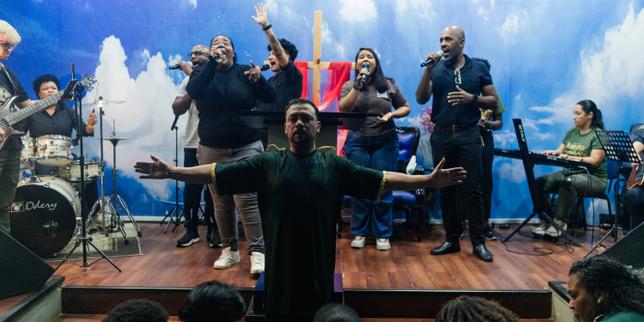
Step inside a Sunday service in Rio de Janeiro or São Paulo, and you will find millions of believers seeking spiritual sanctuary. Lately, many are finding unwanted political baggage instead. For years, powerful megachurch pastors have tied the pulpit directly to conservative political agendas, assuming every member of the congregation marches in lockstep with hardline figures. That assumption is finally breaking apart.
A growing faction of Brazilian evangelicals is pushing back against the weaponization of their faith. They are tired of watching sacred spaces turn into partisan rally stages.
The Cost of Mixing the Altar and the Ballot Box
The political alignment between evangelical leadership and right-wing populism in Brazil is well documented. During recent electoral cycles, prominent pastors openly endorsed candidates from the ultra-conservative camp, creating an environment where dissent felt impossible. If you sat in the pews, you were expected to vote a certain way.
This dynamic paints the entire religious community with a broad, inaccurate brush. Outsiders look at high-profile endorsements and assume every believer shares identical political views. In reality, the community is vast, diverse, and increasingly uncomfortable with this partisan capture.
Believers who care deeply about social justice, economic fairness, and community support find themselves alienated. They want spiritual guidance, not a weekly lecture on culture war talking points. When faith leaders dictate political choices, they risk fracturing their own congregations.
Cracks in the Unified Voting Bloc
Electoral data often points to a heavy concentration of evangelical votes leaning toward conservative candidates. Yet raw numbers hide a more nuanced internal friction. Pastors speaking for millions do not always reflect the private convictions of individual worshippers.
Many everyday churchgoers live paycheck to paycheck in urban peripheries, dealing with real-world struggles like inflation, local crime, and underfunded public healthcare. For these families, political slogans do little to put food on the table. When pastors spend precious service time promoting specific political figures, it creates quiet resentment among members who view their relationship with God as deeply personal rather than political property.
This fatigue opens the door for a cultural shift. Believers are starting to separate their religious identity from political coercion. They are demanding that church leaders return to community care, spiritual counseling, and charity work instead of acting as political brokers.
What Comes Next for Faith and Power in Brazil
The tension inside Brazil's temples is not disappearing anytime soon. Mega-pastors still wield immense media influence and financial muscle. However, the grassroots resistance is growing louder.
When religion becomes a marketing tool for political extremes, faith loses its moral authority. Everyday believers are realizing this truth firsthand. By drawing a hard line between the ballot box and the altar, they are fighting to reclaim their spiritual homes from political opportunists.
Stop assuming entire religious groups operate as monoliths. Pay attention to the individual voices within these communities who are choosing faith over factionalism.


