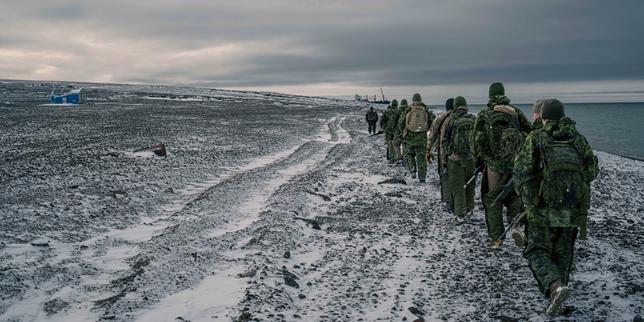
Defending millions of square kilometers of frozen wilderness sounds like a plot from a spy novel. For Canada, it is a daily logistical nightmare.
The Canadian Armed Forces face an impossible geography. When you look at the map, the country's northern expanse spans over 40 percent of its total landmass, yet it hosts a sparse population and almost zero permanent infrastructure. Protecting this massive frontier isn't just about planting a flag. It is about surviving temperatures that plunge below minus fifty degrees and moving troops across regions where roads simply do not exist.
The Reality of Northern Logistics
If you want to understand why northern defense moves at a crawl, look at how supplies get delivered. There are no highways leading to the high polar reaches. Everything depends on tactical airlift missions, sea lifts that only operate during a brief summer window, and improvised ice strips.
Operations like Operation NANOOK-NUNAKPUT show just how much effort goes into establishing even a temporary military footprint. Transporting hundreds of personnel and hundreds of tons of equipment into remote hubs like Resolute Bay requires an enormous coordination effort. You cannot just roll a convoy of trucks up north. You have to fly every single bolt, ration pack, and liter of fuel in.
The Geopolitical Pressure Cooker
Climate change is melting the ice, and that changes everything. As polar ice recedes, new shipping lanes open up. Foreign powers are taking notice. Both Russia and China have ramped up their presence and interest in polar routes and resource extraction.
Canada can no longer rely on the sheer hostility of the climate to act as a natural defense shield. Moscow has reopened Soviet-era bases, and Beijing styles itself as a "near-Arctic state." Ottawa is forced to react, participating in initiatives like NATO’s Arctic Sentry framework to boost situational awareness and deterrence. But presence on paper differs vastly from presence on the ground.
Shortages and Structural Hurdles
Military planners face deep-seated equipment and personnel deficits. Recruitment numbers across Western militaries remain tight, and retaining soldiers willing to deploy to hyper-isolated northern outposts takes specialized incentives.
Furthermore, major defense procurement projects move at glacial speeds. Aging patrol vessels, delayed icebreaker programs, and a lack of modern surveillance arrays leave massive blind spots in the radar coverage. Ground units often struggle with specialized winter gear and reliable tactical communication systems that function properly under extreme polar magnetic conditions.
What Needs to Happen Next
Throwing billions of dollars at defense budgets won't fix structural logistics overnight. Ottawa needs to prioritize decentralized, scalable logistics hubs across the territories. Partnering closely with Indigenous communities—who possess generations of survival expertise and already act as the eyes and ears of the north through the Canadian Rangers—remains the single most effective strategy available.
Without a radical shift in how procurement handles extreme environments, the country's northern sovereignty will remain an aspiration rather than a secure reality.



