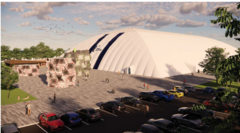
Public money vanishes with astonishing consistency. When Ulster University recently torched plans for a state-of-the-art sports dome at its Magee campus in Londonderry, it left behind a staggering £800,000 bill for nothing. Not a beam erected. Not a single athletic turf laid. Just an empty ledger and a lot of frustrated local voices wondering how preliminary planning can swallow nearly a million pounds before reality sets in.
We’ve seen this playbook before. Big announcements roll out to massive applause. Politicians and university brass hail the incoming development as a generational triumph. Then, months or years later, quiet press releases drop blame on "unforeseen funding pressures" or "escalating construction inflation."
Let's look at what actually happens behind closed doors during these capital projects.
The Anatomy of a Scrapped Venture
Planning any modern recreational or academic infrastructure requires immense capital upfront. Consultants get paid. Feasibility studies get commissioned. Architectural renderings cost small fortunes. By the time anyone asks whether the facility is genuinely sustainable to run year-round, millions have already bled out through professional fees and preliminary site work.
In the case of the scrapped Northern Ireland air dome, officials pointed to soaring running cost projections and construction inflation. You don't need a degree in finance to spot the flaw here. Why were surging construction costs and long-term utility realities not factored into the initial feasibility phase before spending eight hundred thousand pounds of institutional funds?
When private businesses miscalculate project viability to this degree, executives lose jobs and companies restructure. When public institutions or universities do it, the financial loss gets absorbed by budgets meant for education, community engagement, or student resources.
The Cost of False Hope in Regional Hubs
For communities outside major metropolitan centers, losing a flagship project stings differently. Londonderry has long fought for equitable regional investment, especially regarding campus expansion at Magee. When a multi-million-pound recreational facility gets hyped as a community game-changer and then quietly canceled, it triggers deeper anxieties about where priorities truly lie.
Local representatives rightly point out that abandoning these proposals damages trust. You can't repeatedly dangle high-profile amenities in front of regional taxpayers, let the planning tab climb into six figures, and then walk away scot-free without inviting intense public scrutiny.
How to Fix Capital Project Planning
If institutions want to stop burning public capital on blueprints that never materialize, they need a complete overhaul of how projects get greenlit.
- Hard caps on pre-construction spending: Tie preliminary funding milestones to binding financial audits. If a project hasn't secured long-term operational backing, spending hundreds of thousands on architectural gloss should be blocked immediately.
- Realistic inflation models: Accounting methods need to stop using optimistic baseline cost estimates. If market volatility is high, build worst-case inflation scenarios into the very first feasibility review.
- Community accountability: Transparency shouldn't start only when a project is canceled. Taxpayers deserve real-time visibility into how preliminary funds are being allocated before they evaporate into consultant fees.
Stop treating early-stage funds as low-stakes trial money. Every pound spent on a scrapped facility is a resource stolen from something that could have actually been built, maintained, and enjoyed.
Businessman Ordered To Tear Down Massive Stadium-Style Extension After Appeal Fails
This video provides context on unauthorized or scrapped large-scale building developments and the subsequent fallout of wasted construction efforts.
http://googleusercontent.com/youtube_content/1