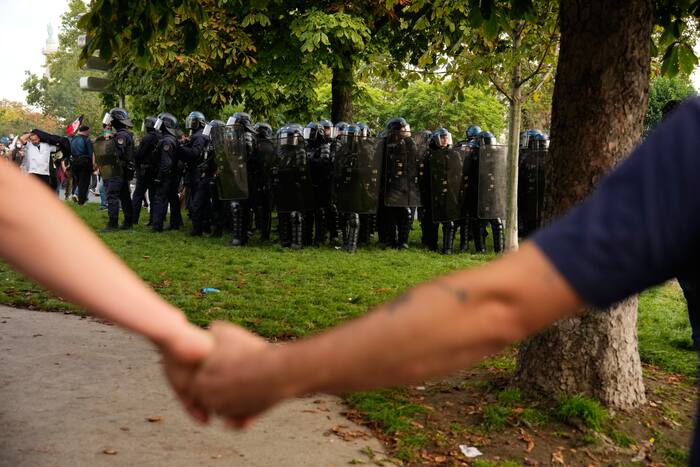
A 14-year-old kid in Saint-Ouen l'Aumône went out to protest crumbling high school facilities. He came home with a shattered jaw, missing teeth, and the inability to speak. A 15-year-old in Lens lost an entire hand to a police stun grenade. In Tours, a 16-year-old was partially blinded by a riot-control round.
These aren't hardened street fighters clashing with urban security forces. They're middle and high school students. They're kids demanding better funding, more replacement teachers, and functional classrooms. Instead of meeting demands with educational reforms, French authorities unleashed a massive security apparatus that has swept up over 6,600 minors in mass arrests.
If you want to understand why trust in the French Republic is evaporating among teens, look no further than the smoke canisters and flash-ball guns deployed outside school gates.
The Reality Behind the Crackdown
France has a long history of volatile street protests. When farmers blockade highways or manure-bomb government offices, law enforcement often plays the long game with a measured touch. But when teenagers fill public squares over under-resourced schools, the response looks entirely different.
Thousands of adolescents have been hauled into police stations during nationwide demonstrations that erupted in mid-September. Attorneys representing detained youth report horrific conditions. Kids spend hours locked in unsanitary holding cells with no sleep, facing aggressive interrogations designed to terrorize them into silence.
Interior Minister Laurent Nunez eventually suspended the specific model of stun grenade suspected of mutilating the student in Lens. Yet, officials continue to defend the broader strategy as a proportionate response to localized vandalism and rowdy crowds. That defense rings hollow when you're talking about heavy projectile launchers aimed at children.
Why This Protests Movement is Different
Most school walkouts fade after a couple of afternoon chants. This one feels different because the state's heavy-handed reaction is fast-tracking political radicalization.
When you lock up teenagers with no criminal intent, throw them into filthy cells, and let officers threaten their futures, you don't scare them into submission. You teach them that the state views them as an enemy.
Witness accounts from Paris demonstrations reveal a stark divide. Minority students frequently report being singled out arbitrarily by officers who point fingers in crowds and demand they step aside. While government officials vehemently deny systemic bias within the ranks, the lived experience on the street tells a completely different story.
Teens walking out of custody aren't backing down. They're learning to run faster, organize smarter, and distrust authority completely.
What Comes Next for French Youth
The French state prides itself on the foundational motto of Liberty, Equality, and Fraternity. For thousands of teenagers nursing broken bones and chemical burns, those words now sound like a sick joke.
Fixing overcrowded classrooms and a severe shortage of teachers requires actual budgetary investment and administrative competence. Shooting high-pressure tear gas canisters directly into groups of kids is an easier shortcut, but it carries a devastating human cost.
France isn't just dealing with a temporary student strike. It's alienating an entire generation before they even reach voting age, proving that when the state runs out of arguments, it relies on brute force.



