Every October, a familiar debate erupts across the United States. Monuments are guarded, politicians trade talking points, and communities clash over how the nation remembers its past. At the center of this friction stands Indigenous Peoples Day, a direct challenge to the traditional narratives built around European colonization.
If you think this is just about changing a name on a calendar, you're missing the entire point. This day represents a long-overdue reckoning with history, culture, and ongoing struggles for sovereignty. Let's look past the surface-level arguments and examine what Indigenous Peoples Day actually means, why it exists, and how it continues to reshape American society.
The Origins of a Counter-Celebration
Indigenous Peoples Day didn't appear overnight. It grew out of decades of grassroots organizing by Native activists who refused to let their histories be swept under the rug. Berkeley, California, became the first U.S. city to officially replace Columbus Day with Indigenous Peoples Day back in 1992, coinciding with the quincentennial of Columbus's arrival.
The choice of date wasn't random. Occupying the exact same slot as Columbus Day on the second Monday of October is deliberate. Activists point out that honoring an explorer whose expeditions initiated centuries of violence, forced assimilation, and land dispossession ignores the reality of the people who were already thriving here.
By placing Indigenous resilience front and center on the exact day once reserved solely for glorifying colonization, communities force a public conversation. It's a statement that erasure didn't work. Native nations survived, adapted, and continue to demand institutional respect.
More Than a Holiday: A Day of Protest and Action
Many people assume Indigenous Peoples Day is just a cultural festival filled with traditional dances, food vendors, and art displays. While those celebrations are vital, they only tell half the story.
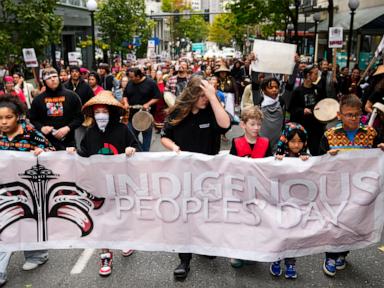
For countless Native Americans, the day functions as a powerful vehicle for protest and political resistance. Rallies regularly target pressing modern grievances:
- Fighting for environmental justice to protect sacred lands from industrial pipelines and resource extraction.
- Demanding the return of stolen ancestral territories through the Land Back movement.
- Calling urgent attention to the crisis of missing and murdered Indigenous women (MMIW).
- Challenging institutional neglect and demanding real treaty enforcement from state and federal governments.
When you see a march in Minneapolis, Seattle, or New York City, you're watching people refuse to accept a sanitized version of history. They're connecting past atrocities directly to present-day injustices.
The Battle Over National Recognition
While dozens of cities, school districts, and roughly seventeen states—including places like Maine, New Mexico, and South Dakota—have officially adopted Indigenous Peoples Day, it remains absent from the federal calendar as an official replacement for Columbus Day.
Federal recognition has seen incremental traction, notably when the Biden administration issued the first presidential proclamations commemorating the holiday starting in 2021. Yet, political pushback remains fierce. Critics frequently frame the shift as an attack on Italian-American heritage.
Indigenous leaders have repeatedly pushed back against that false dichotomy. Cultural organizers point out that Italian-American history is rich with contributions worth celebrating, but tying that heritage to a figure central to the destruction of indigenous populations makes little sense. You can honor Italian-American culture without celebrating violent colonization.
How to Engage Meaningfully
If you want to move beyond performative social media posts and genuinely engage with Indigenous Peoples Day, you have to take concrete action.
First, educate yourself about the specific Native nations whose ancestral lands you currently occupy. Organizations like the Native Land Digital project make it easy to find out whose territory you call home.
Second, support Indigenous-owned businesses, artists, and creators year-round, not just in October. Put your money where your mouth is.
Finally, listen to local tribal leaders when environmental or political battles arise in your state. True allyship requires showing up when the cameras are off and supporting Indigenous sovereignty every single day of the year.
Support Indigenous creators and learn more about native advocacy by watching this overview on the US celebration of Indigenous Peoples Day. This video highlights the historical context and ongoing efforts of Indigenous leaders to reclaim their narratives in America.
http://googleusercontent.com/youtube_content/1