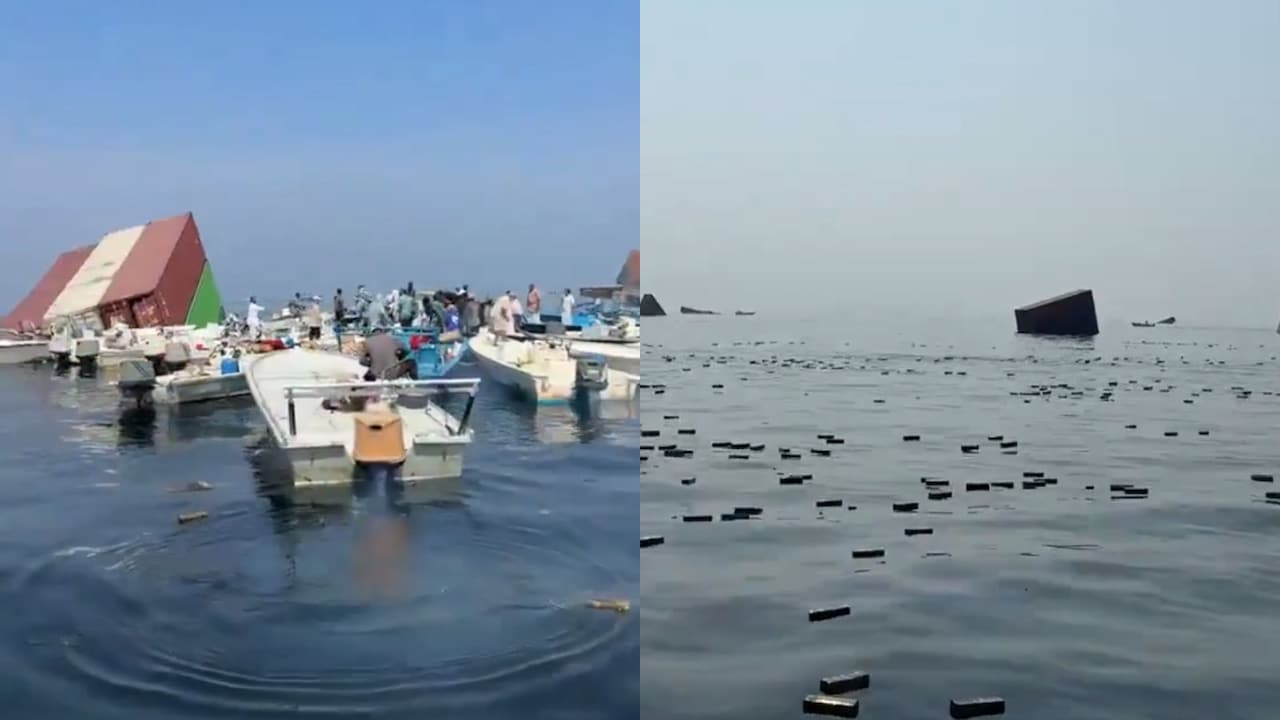
A massive container ship goes down. Floating boxes bob across the waves. Suddenly, local waters turn into an open-air treasure hunt.
When the Singapore-flagged cargo vessel GFS Pride sank near Iran's Gulf coast following a fire and a reported sea mine blast, it didn't just disrupt international trade lanes. It triggered an absolute frenzy. Hundreds of local fishermen jumped into small wooden boats and salvage craft, racing toward the Strait of Hormuz to pull high-end luxury items straight out of the sea.
We aren't talking about scrap metal or bulk grain. Videos flooding social media show men hauling boxes of high-end smartphones and French perfume out of partially submerged containers. Some boats even tried to tow entire shipping containers through choppy waters. It's a bizarre collision of modern geopolitical conflict and chaotic coastal scavenging.
What Actually Happened to the GFS Pride
The timeline of the sinking is messy. Official reports from Singapore state that a fire broke out on board the GFS Pride, forcing the safe evacuation of all 21 crew members without any injuries.
Things look different from Tehran's perspective. The Iranian Revolutionary Guard Corps (IRGC) navy claims the vessel wandered into an unauthorized and dangerous maritime route before striking a sea mine. The ship went down carrying over 2,500 containers, including coveted shipments of electronics.
Commercial shipping through the Strait of Hormuz has turned perilous. The GFS Pride is the third ship to sink in the region since late February, highlighting a sharp escalation in regional maritime conflicts. As shipping companies panic, local communities see an unexpected windfall floating right past their docks.
The Legal and Financial Reality of Sea Salvage
Scavenging a sunken cargo ship looks thrilling on camera, but the legal reality is complicated. Maritime law doesn't treat floating or sunken cargo as public property just because it fell into the ocean. Legally, those goods still belong to their owners, insurers, or the shipping lines.
When local fishermen haul crates of electronics and perfume onto their skiffs, they are technically engaging in unauthorized salvage. Yet, enforcement in active conflict zones near the Strait of Hormuz remains practically nonexistent. Port authorities and naval forces have bigger priorities than chasing down villagers carrying salvaged boxes.
Insurance companies will eventually write off the lost cargo, but the immediate spectacle highlights how vulnerable global supply chains are when disaster strikes strategic waterways.
Geopolitical Fallout in the Strait of Hormuz
The loss of the GFS Pride is just a symptom of a much larger crisis. Regional tensions have reached a boiling point, with commercial vessels facing continuous threats.
Tehran made its stance clear shortly after the incident. Iranian military officials tied the reopening and safe navigation of the Strait of Hormuz directly to the complete withdrawal of US forces from the region. Spokesmen for Iran's army warned that foreign troops would be driven out if they stayed, blaming Washington for the persistent insecurity plaguing local waters.
Shipowners are now stuck between conflicting navigation directives. The IRGC has urged commercial vessels to stick strictly to designated corridors monitored by Iran's armed forces, promising safety for compliant ships. Meanwhile, international maritime agencies keep issuing severe warnings against entering the zone entirely.
What This Means for Global Supply Chains
Every time a major cargo artery like the Strait of Hormuz gets compromised, the economic shockwaves travel fast. Higher insurance premiums, delayed shipments, and rerouted vessels add massive costs to global trade.
While viral videos of fishermen grabbing luxury goods provide a surreal distraction, the reality points to mounting instability. As long as regional standoffs persist, commercial shipping lanes will remain high-risk zones where millions of dollars in cargo can vanish beneath the waves in minutes.
Watch how insurance markets react over the coming weeks. Shipowners ignoring designated local corridors will face staggering financial penalties, while local coastal communities keep a watchful eye on the horizon for the next floating windfall.



