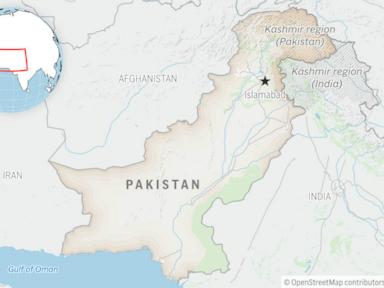
Another routine training flight turned fatal this week when a Pakistan Army Aviation Mushshak aircraft went down near Nawan Killi in Quetta, claiming the lives of both crew members.
Military authorities confirmed that Major Husnain Shehzad Humayun, an instructor pilot, and Captain Abdul Samad, a student pilot, were killed in the midday crash. According to the Inter-Services Public Relations (ISPR), a technical fault triggered the accident in Balochistan's provincial capital. President Asif Ali Zardari and Prime Minister Shehbaz Sharif released statements expressing profound grief, but national condolences don't fix the underlying safety challenges facing military aviation.
The Risks Behind Routine Sorties
Flight training is inherently dangerous, yet public scrutiny spikes whenever an incident involves veteran instructors and student aviators. The aircraft involved—the PAC MFI-17 Mushshak—serves as the backbone of basic flight training for the military. It's a rugged, propeller-driven trainer built for reliability, which makes sudden technical failures particularly devastating during midday sorties.
When a crash happens, military aviation experts immediately look at three variables:
- Maintenance logs and component lifespans
- Environmental factors unique to the rugged terrain of Balochistan
- Avionics and engine performance data recovered from the wreckage
A Pattern of Technical Failures
This tragedy isn't an isolated event. Military aviation in the region has weathered a string of similar incidents over recent years. Last June, a Pakistan Army Aviation Mi-17 helicopter crashed near Muzaffarabad due to a technical fault. Months prior, other tactical and training platforms suffered fatal accidents during routine missions across various provinces.
Critics often point out that official military statements attribute these accidents to technical malfunctions without releasing comprehensive public inquiry reports. Without transparent post-crash data accessible to the public, speculation grows regarding fleet aging, supply chain constraints for spare parts, and the immense pressure placed on training pipelines.
What Happens Next
The ISPR typically constitutes a board of inquiry to dissect every second of the final flight path, reviewing radio chatter, telemetry, and wreckage dispersion. For the families of Major Husnain Shehzad Humayun and Captain Abdul Samad, official honors provide little comfort against the sudden loss.
Until the military opens up about specific component failures or fleet-wide safety audits, training squadrons will continue to face high-stakes risks every time they clear the tarmac.