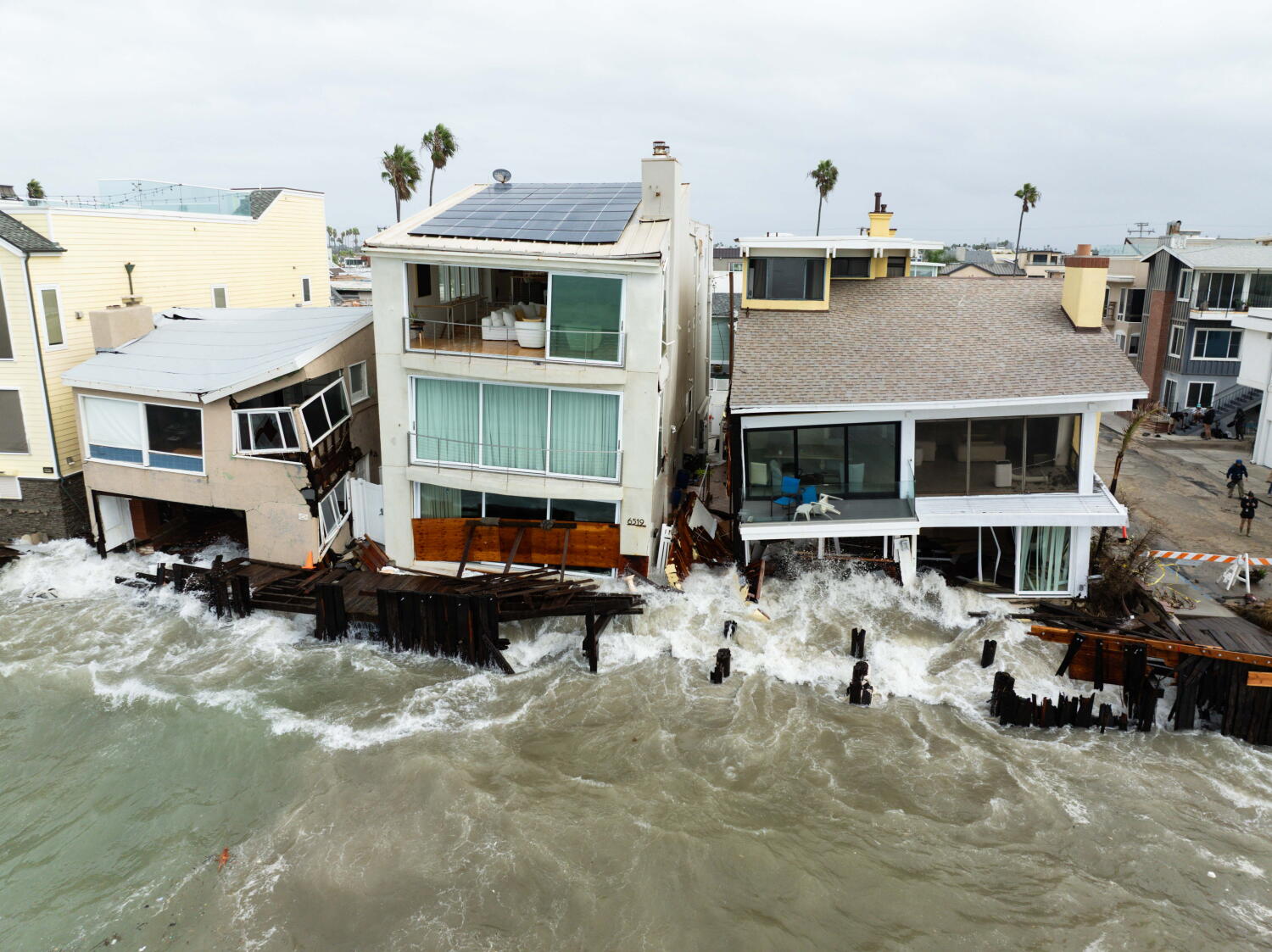
You can throw all the concrete and cash you want at the coastline, but the tide doesn't care about your municipal budget. When powerful storm surges and rising sea levels batter Southern California beachfronts—like the dramatic structural damage seen recently along the Peninsula on Seaside Walk in Long Beach—civic leaders love to trot out announcements of upcoming millions in infrastructure investments.
It sounds reassuring. It looks good on the evening news. But honestly? It's a temporary bandage on a hemorrhage.
The Illusion of Coastal Armor
For decades, coastal cities have relied on a simple strategy: build it higher, build it stronger, and hope the ocean gets tired. We pour millions into seawalls, rock revetments, and emergency sand berms. Yet, nature keeps exposing the limits of these engineering fixes.
When high tides align with fierce swells, wave action undermines foundations faster than contractors can pour fresh concrete. Take a look at recent incidents where ocean-facing homes on Seaside Walk watched decks shatter and windows cave in as water breached living spaces. No amount of standard municipal expenditure fixes the fundamental geography of building right at the water's edge on a dynamic, shifting coastline.
Why Traditional Engineering Is Failing
Cities like Long Beach face a compounding set of pressures. You have rising sea levels driven by global climate shifts, land subsidence in certain coastal zones, and aging stormwater infrastructure that struggles to drain inland when high tides block outfalls.
When officials announce multi-million-dollar grants, taxpayers assume it means permanent protection. It rarely does. Those funds usually go toward:
- Emergency sand replenishment that washes away with the next winter storm.
- Shoreline bulkheads that can exacerbate erosion on neighboring unarmored plots.
- Short-term drainage upgrades that get overwhelmed the moment a true atmospheric river or king tide hits.
We are treating chronic systemic vulnerability with acute cosmetic treatments.
The Hard Choices Ahead
At some point, throwing money at seawalls becomes economically unsustainable. Property owners along vulnerable stretches of the coast are learning that insurance premiums are skyrocketing, if coverage is available at all. Local governments are caught between protecting existing tax bases and pouring endless funds into defenses that have an expiration date.
Managed retreat and proactive zoning reforms are dirty words in real estate development, but they're the only realistic long-term answers. Until cities stop pretending that engineering can permanently conquer sea level rise, millions in investments will remain little more than expensive sandcastles against the tide.



