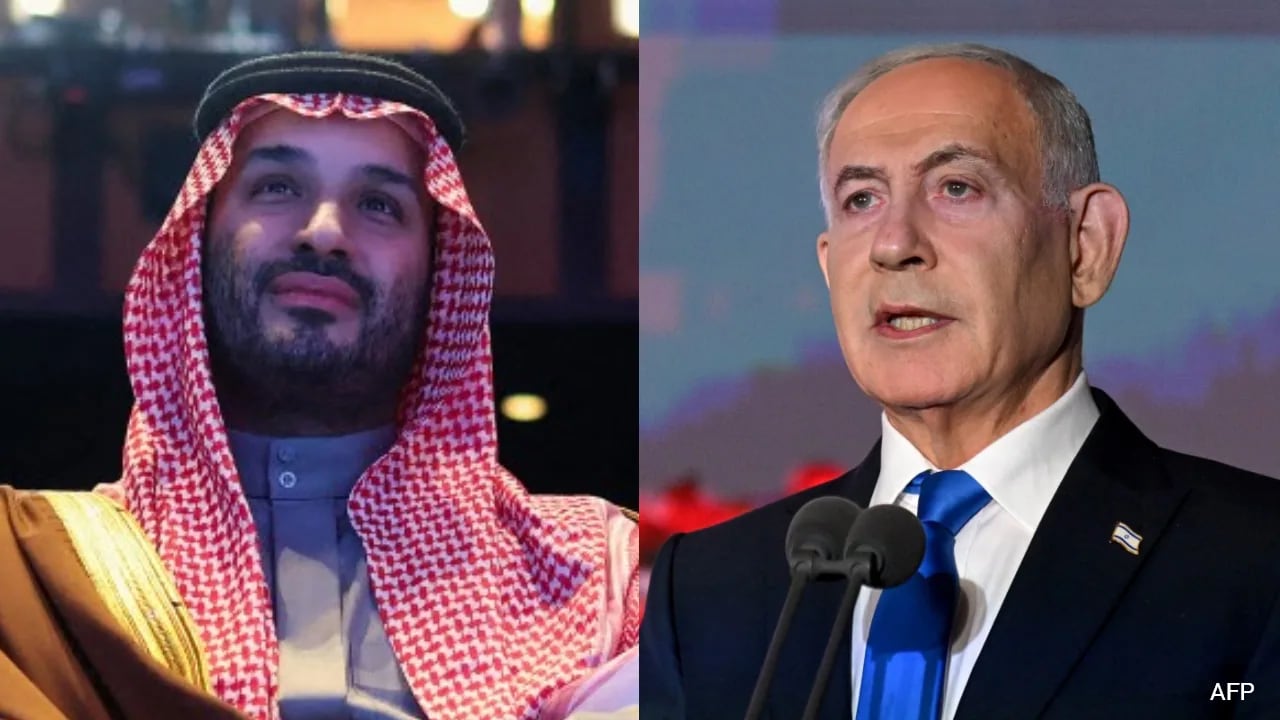
Geopolitics rarely operates on pure altruism. When Benjamin Netanyahu recently looked for a new military sandbox, he knocked on Riyadh's door. He wanted Israeli fighter jets and intelligence assets to join Saudi Arabia's long-running fight against the Houthi movement in Yemen.
Mohammed Bin Salman said no. Flat out.
It wasn't a complicated diplomatic dance. It was a hard boundary drawn by a leader who knows his own backyard better than any foreign visitor ever could. If you think diplomatic overtures are just about shaking hands and signing treaties, you're missing the ruthless domestic calculus driving Middle Eastern power politics today.
Let's look at why Tel Aviv wanted in, why Riyadh slammed the door, and what this quiet rejection actually means for the region.
The Strategy Behind The Israeli Request
Tel Aviv didn't offer military help out of the goodness of its heart. Netanyahu is playing a multi-layered chess game. With active bombing campaigns involving Iran scaling back temporarily, Israeli leadership needed a way to cement a strategic foothold in the Arabian Peninsula.
According to reports citing regional diplomatic sources, Israeli officials pushed US intermediaries to pitch the idea. The logic from the Israeli side was simple. If Israeli and Saudi forces fought side-by-side against a common Iranian-backed proxy like the Houthis, it would force a de facto security alignment.
Normalization agreements don't happen in a vacuum. Netanyahu figured that shared combat boots on the ground would bypass the stubborn political roadblocks standing in the way of formal diplomatic ties. It's a classic maneuver. Create a shared threat, insert your military, and force an alliance by necessity.
Except Riyadh didn't bite.
Why Riyadh Said No
Mohammed Bin Salman understands Arab public sentiment better than Western pundits give him credit for. Accepting Israeli military intervention against the Houthis in Yemen would have triggered an immediate, explosive public backlash across Saudi Arabia and the broader Arab street.
You cannot ignore the optics. For decades, the Palestinian issue has served as an emotional touchstone across the Middle East. Riyadh has maintained a consistent public stance: formal normalization with Israel depends entirely on a credible path toward a Palestinian state. Netanyahu has explicitly sworn off that very outcome to appease his right-wing domestic coalition.
When you look at it through that lens, letting Israeli jets operate over or near the Red Sea in coordination with Saudi operations is political suicide for the crown prince. The domestic cost vastly outweighs any tactical advantage the Israeli military could possibly offer. Saudi Arabia's airspace and regional infrastructure have already faced severe disruptions from Houthi drone and missile strikes—including airport closures and oil facility incidents. Adding the volatile variable of direct Israeli military partnership would invite domestic instability that Riyadh cannot afford.
The Normalization Illusion
Most international media coverage frames the Saudi-Israeli normalization track as a matter of when, not if. That is an oversimplification.
Back in the fall of 2023, Washington was brokering a high-stakes deal between the two nations. Netanyahu was allegedly so protective of that prospective agreement that he tried to sidestep major escalations in Gaza. Yet, subsequent reporting from outlets like the Washington Post revealed that Saudi intelligence had actually warned Netanyahu about Hamas's impending October 7 operations—warnings that went unheeded.
That trust deficit didn't vanish. It deepened.
When Netanyahu attempts to pivot now by offering to help solve the Houthi problem, he is treating the kingdom like a transactional partner willing to look past regional grievances for quick military muscle. But Saudi Arabia is charting an independent foreign policy course. Riyadh has re-established diplomatic channels with Iran, secured its own economic diversification through Vision 2030, and refuses to let foreign actors dictate its security posture.
What Happens Next
The refusal is a clear signal. Israel cannot bomb its way into a regional coalition without addressing the core political grievances of the region. Riyadh holds all the cards in this bilateral equation. They want economic transformation, technological cooperation, and American security guarantees on their own terms—not under terms dictated by a foreign prime minister facing his own domestic survival crisis.
Keep your eyes on how Riyadh manages the Houthi threat independently, through regional diplomacy and targeted security measures, entirely bypassing Tel Aviv. The Middle East is shifting toward multipolarity, and old tricks of forcing alliances through battlefield participation simply don't work anymore.