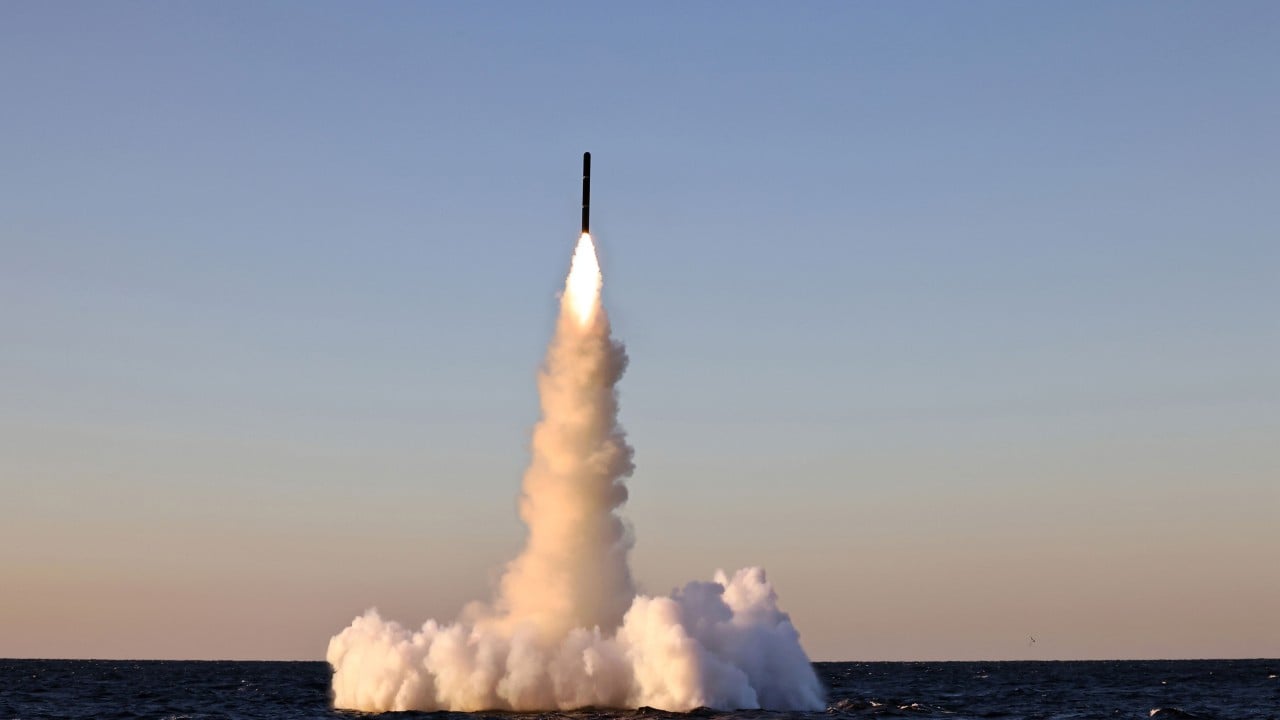
The Shift Beneath the Waves
Defense analysts are missing the entire point about Pyongyang's latest moves. When strategic planners look at the Korean Peninsula, they spend millions tracking land-based TELs, spotting underground silos, and watching surface vessels. They miss what happens down in the cold, dark water. North Korea’s dual undersea missile tests aren't just another routine provocation. They represent a fundamental shift in how asymmetrical warfare bypasses modern radar.
You're watching regional defense architectures crack in real time. Standard early-warning systems built by Seoul, Tokyo, and Washington rely heavily on atmospheric radar sweeps. Submersible or submarine-launched platforms change the geometry of the threat entirely. They shorten reaction times to practically zero.
If you want to understand why military commanders are sweating through their uniforms right now, look at the geography. The Sea of Japan and the Yellow Sea are notoriously noisy, shallow, and difficult to monitor acoustically. North Korea knows this. They are exploiting every single blind spot in allied sonar grids.
How Subsurface Launches Beat Traditional Shielding
Let's break down the mechanics. Traditional ballistic missile defense systems like the US Aegis Combat System or terminal high altitude area defense batteries are optimized for high-arc, upward-looking trajectories. They track exhaust plumes blazing against the stratosphere.
Undersea cruise missiles play a completely different game. They fly low, hug the terrain, and maneuver unpredictably. When launched from a submerged platform, they bypass the critical boost-phase tracking window that ground radars rely on.
- Radar horizons drop dramatically against low-flying targets.
- Acoustic detection of small experimental submersibles remains notoriously unreliable.
- Interception windows shrink from several minutes to mere seconds.
Honestly, the regional arms race has moved past simple deterrence. South Korea's "Kill Chain" strategy and the broader extended deterrence framework rely on preemptive spotting. You can't preempt what you can't see coming off a submerged barge or a modified conventional submarine.
The Regional Arms Race Accelerates
Seoul isn't sitting still, but they're playing catch-up against a clock that's ticking faster every month. Look at recent defense budget allocations across East Asia. Japan is acquiring counterstrike capabilities. South Korea is ramping up indigenous mass-punishment systems and conventional prompt strike options.
The escalatory spiral feeds on uncertainty. Every time Pyongyang demonstrates a new delivery vector, Washington and its regional partners respond by tightening joint exercises and deploying strategic assets like nuclear-capable submarines to rotational ports.
This creates a dangerous cycle of action and reaction.
Military planners call this the security dilemma. One side builds a capability for defense or political leverage; the other side perceives an existential threat and builds a countermeasure. Pretty soon, nobody has stability. Everyone has hair-trigger readiness protocols.
What Comes Next for Peninsula Security
Don't expect regional tensions to cool off because of diplomatic overtures. The technical milestones Pyongyang is hitting right now require field testing. They need to validate propulsion systems, guidance accuracy, and payload separation under actual maritime conditions.
Expect more maritime restrictions, sudden navigational warnings, and high-stakes cat-and-mouse games between allied anti-submarine warfare assets and North Korean naval units.
To track this accurately, stop looking at the rhetoric coming out of state media broadcasts. Watch the maritime patrol aircraft movements. Watch where the P-8 Poseidon fleets fly out of bases in Japan. The real story of regional defense isn't written in speeches. It's written in the sonar logs and radar tracks of the ships patrolling the western Pacific.



