When you hold a top-secret security clearance inside the federal government, people assume you protect state secrets. They don't expect you to treat the national treasury like your personal checking account. Yet that is precisely what David J. Rush did.
Operating from Ashburn, Virginia, this former senior federal executive didn't just embezzle funds. He invented an entire fictitious government structure out of thin air, fabricating a Special Access Program to siphon nearly $194 million in public money. If you think corporate embezzlement is wild, federal white-collar crime on this scale operates on an entirely different plane of audacity.
The Anatomy of a Phantom Government Operation
The scheme relied heavily on institutional trust and bureaucratic complexity. Rush held a Top Secret and Sensitive Compartmented Information clearance, giving him deep inside knowledge of how restricted government initiatives function. He used that credibility to build fake operational mechanisms that looked legitimate on paper.
He didn't stop at fake programs. Prosecutors note that he lied about core biographical details, including his military experience and education, to climb into his senior executive position. Once installed, he directed federal funds away from actual operations and straight into his own financial ecosystem.
Where the Money Actually Went
Stealing nearly $194 million creates a massive logistical problem: what do you do with truckloads of cash? Rush answered that question by investing in hard assets and extreme luxury.
Federal investigators tracking the money trail discovered he moved approximately $145 million through wire transfers into high-end real estate, luxury wristwatches, and high-performance vehicles. The list of luxury goods seized by the FBI reads like a billionaire wishlist:
- Two 2026 BMW Alpina cars, including one valued at roughly $172,000.
- Thirty luxury watches, with Rolex models leading the collection.
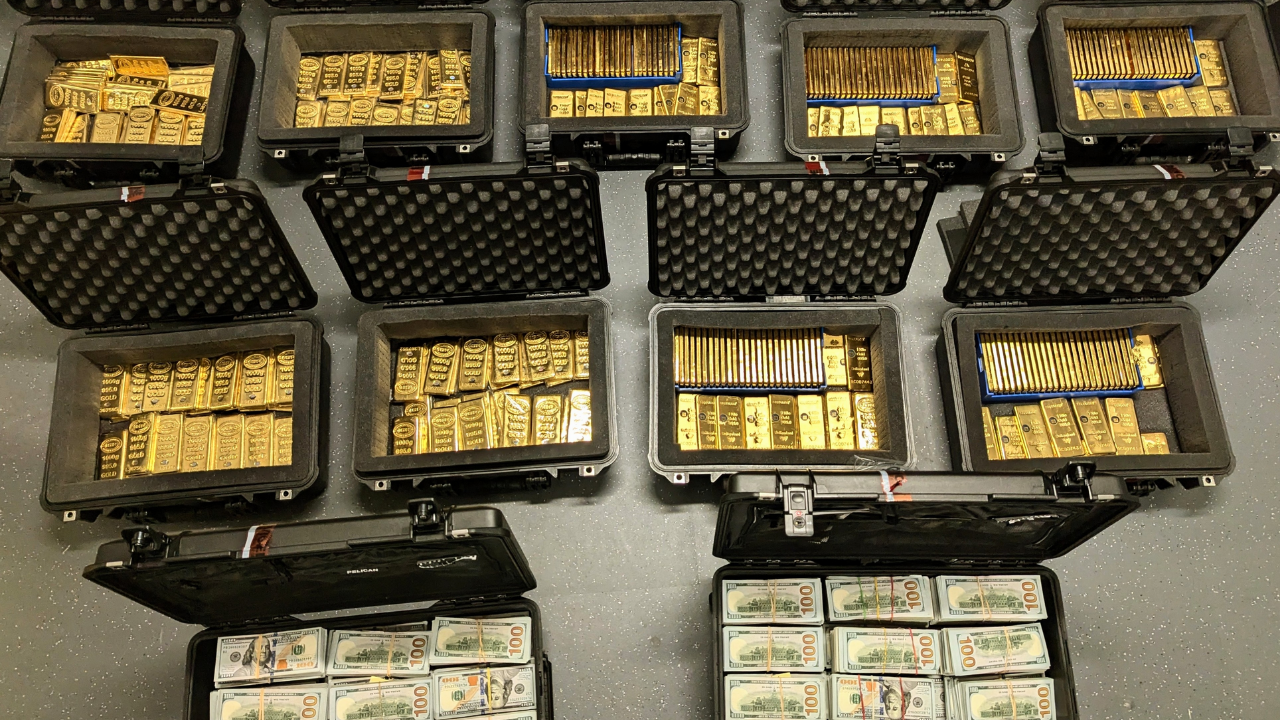
- Stashes of foreign and domestic currency, totaling over $2.1 million in US cash alongside more than 104,000 euros.
Most notably, the physical search of his residence on May 19, 2026, revealed an astonishing hoard of precious metals. Agents pulled 298 gold bars from his property, representing roughly $46 million in state-funded bullion.
The Breakdown in Oversight
How did a fraud reaching $193,590,400 go undetected for so long? That remains the central question haunting intelligence agencies. The operation finally unraveled due to an internal investigation by the CIA, which flagged suspicious conduct and referred the matter directly to the FBI.
CIA Director John Ratcliffe publicly noted that Rush severely betrayed public trust by weaponizing his high-level position. Beyond the criminal charges, the breach triggered broader national security concerns. The Director of National Intelligence formally requested an independent investigation by the Inspector General for the Intelligence Community to figure out how internal monitoring failed to catch the phantom program sooner.
Facing the Reckoning
Rush pleaded guilty on October 6, 2026, admitting to the massive fraud scheme. He now awaits a sentencing hearing scheduled for January 28, 2027. He faces up to 20 years in federal prison, alongside mandatory asset forfeiture, restitution, and substantial fines.
The Justice Department continues its investigation to determine whether anyone else aided the operation or looked the other way while millions vanished into gold and real estate.