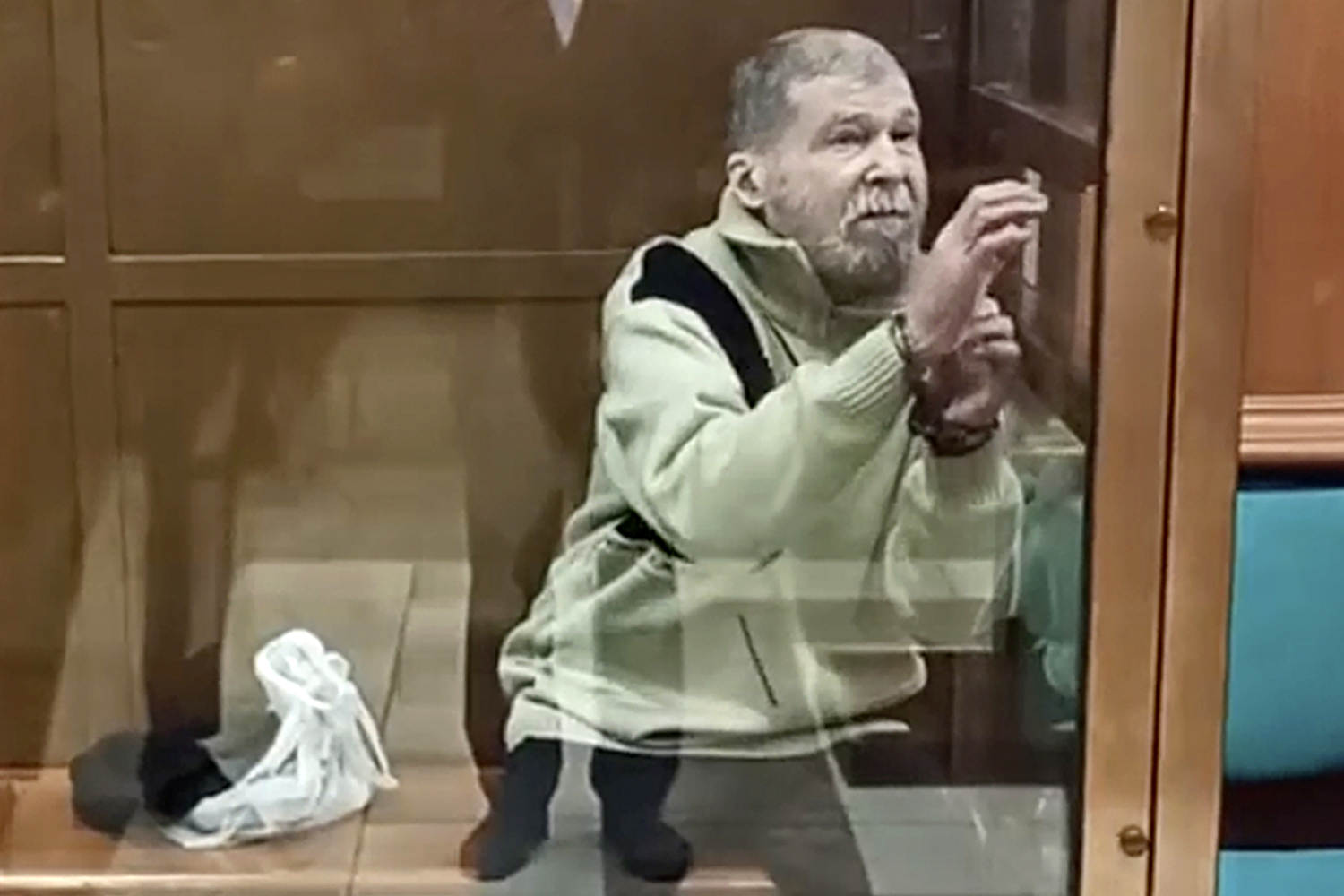
Geopolitics rarely moves in straight lines, but sometimes a single transaction lays bare an entire diplomatic strategy. When 74-year-old retired American English teacher Stephen Hubbard walked free from a Russian prison facility, it wasn't just a humanitarian gesture. It was a calculated opening salvo in high-stakes negotiations over the war in Ukraine.
If you've been watching Washington and Moscow trade barbs for years, this sudden release hits differently. Let's look at what actually happened, why it matters right now, and what it signals for the future of the conflict.
Who Is Stephen Hubbard and How Did He End Up in Russia's Crosshairs?
Stephen Hubbard's story is miles away from your typical spy thriller. Originally from Big Rapids, Michigan, Hubbard served in the United States Air Force and the National Guard before spending decades teaching English overseas, mostly in Japan. Retirement eventually drew him to Ukraine, where he settled down in the city of Izium with a Ukrainian partner.
Then came February 2022.
When Russian forces rolled into Ukraine and occupied Izium, Hubbard's quiet retirement ended abruptly. In April 2022, Russian troops detained the then-68-year-old expat. For a long time, his whereabouts remained murky until a closed-door trial in the Moscow City Court hauled him back into public view in late 2024.
The charges were staggering. Russian prosecutors claimed Hubbard was acting as a mercenary for the Ukrainian military, alleging he signed a contract and manned checkpoints for a monthly fee of one thousand dollars. His family fiercely denied the allegations, pointing to his advanced age and history as an educator. Despite the protests, a Moscow court handed down a sentence of nearly seven years in a penal colony under Article 359 of the Russian Criminal Code.
The Biden administration later designated Hubbard as wrongfully detained, putting him on the radar of federal negotiators. But the real shift happened when political leadership changed hands back in Washington.
The Timing of the Release and the Witkoff Factor
You don't need a degree in international relations to spot the connection between prisoner releases and backchannel diplomacy. Hubbard's freedom coincided precisely with high-level talks in Saint Petersburg between Russian President Vladimir Putin and White House envoy Steve Witkoff.
President Donald Trump stated publicly that he directly asked Putin to let Hubbard go. Putin obliged, announcing the release while Witkoff's delegation was on the ground. Hubbard was immediately routed to Pulkovo Airport in St. Petersburg to begin his journey home.
This transactional style of diplomacy defines how current backchannels operate. The Trump administration has shifted toward direct, bilateral maneuvering to freeze or end the protracted conflict in Ukraine. By lifting certain economic restrictions on Moscow and criticizing ongoing military aid pipelines to Kyiv, Washington has signaled a willingness to deal. In return, freeing an aging American prisoner offers an immediate PR victory and a clear signal that negotiations have active momentum.
What This Means for the War in Ukraine
Let's be honest about the broader implications. Prisoner swaps and humanitarian releases are classic confidence-building measures, but they also serve as smoke signals for bigger compromises.
When a 74-year-old teacher gets bundled onto a plane while special envoys are negotiating territory and security guarantees, you are watching peace talks take shape in real time. Critics argue that giving up leverage or easing sanctions too early rewards bad behavior on the world stage. Proponents counter that ending a catastrophic war requires breaking decades of diplomatic ice, and you can't get there without making concessions.
The release of Stephen Hubbard proves that backchannel diplomacy is back in full swing. Whether this specific goodwill gesture paves the way for a durable ceasefire or simply marks another chapter in a grinding war of attrition remains to be seen. Either way, the rules of engagement between Washington and Moscow are rewriting themselves right now.



