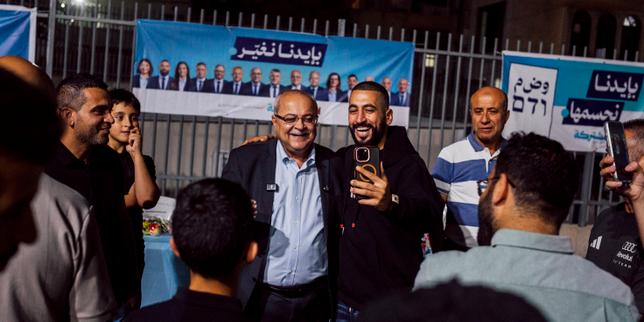
You can feel the tension in Arab towns across Israel right now. With the general election approaching on October 27, 2026, the mood has shifted from habitual apathy to raw urgency. For decades, a large segment of Arab citizens felt that casting a ballot changed nothing. They watched governments come and go while infrastructure crumbled, crime rates skyrocketed, and housing demolitions continued unchecked. But this cycle feels completely different.
People who swore off voting forever are heading to the registrar's office. When you look at the numbers, the stakes become crystal clear. Arab-led factions and potential voter mobilization could secure anywhere from 10 to 17 seats in the 120-seat Knesset, according to recent Task Force projections. That puts them right in the kingmaker position, capable of tipping the scales in a deeply fractured political landscape where neither major bloc is guaranteed a clear majority.
Breaking Past the Apathy Trap
For years, the mainstream political narrative treated Arab citizens as permanent outsiders. Right-wing figures like Benjamin Netanyahu have repeatedly weaponized anti-Arab rhetoric to galvanize their base, while parts of the Zionist opposition have acted too timid to embrace a genuine partnership. This cowardice handed the right an easy playbook.
Yet, community priorities remain stubbornly practical. Recent surveys show that public safety and violent crime dominate voter concerns, with roughly 73% of Arab citizens demanding that their elected representatives focus heavily on law enforcement and local security. Meanwhile, soaring living costs squeeze working families just as hard as their Jewish neighbors. When entire neighborhoods face home demolitions—such as the recent razing of dozens of structures in the Negev desert—voting stops being an abstract ideological exercise and turns into a matter of basic survival.
The Kingmaker Dilemma
The big question isn't whether Arab voters will show up—it's how the rest of the political establishment will handle their power if they do. Parties like Ra'am have already demonstrated that legislative pragmatism can yield tangible results for local budgets and civil integration. Mansour Abbas proved that minority representatives can sit at the table and demand funding for Arab municipalities without abandoning their identity.
Still, deep divisions remain within the Arab political spectrum itself. Debates over whether to run on a unified list or split into separate factions have plagued leadership for years. Voters are exhausted by infighting. They want a cohesive front that can block extremist legislation and force whoever forms the next government to address systemic economic and social discrimination.
If the center-left opposition continues to shun potential cooperation out of fear, they are basically handing the keys back to Netanyahu on a silver platter. True democratic renewal requires breaking old taboos and treating Arab citizens as equal stakeholders in the nation's future.
Don't ignore what happens at the ballot boxes on October 27. The outcome will redefine the country's legislative direction for years to come.
Check out Al Jazeera's Election Guide for a detailed breakdown of how the voting system works, or review the Task Force Report to understand the core priorities driving Arab turnout this cycle.
Israel: Are Arab parties excluded from the elections?
This short video provides visual context on the debates surrounding the potential exclusion of Arab parties ahead of the parliamentary vote.