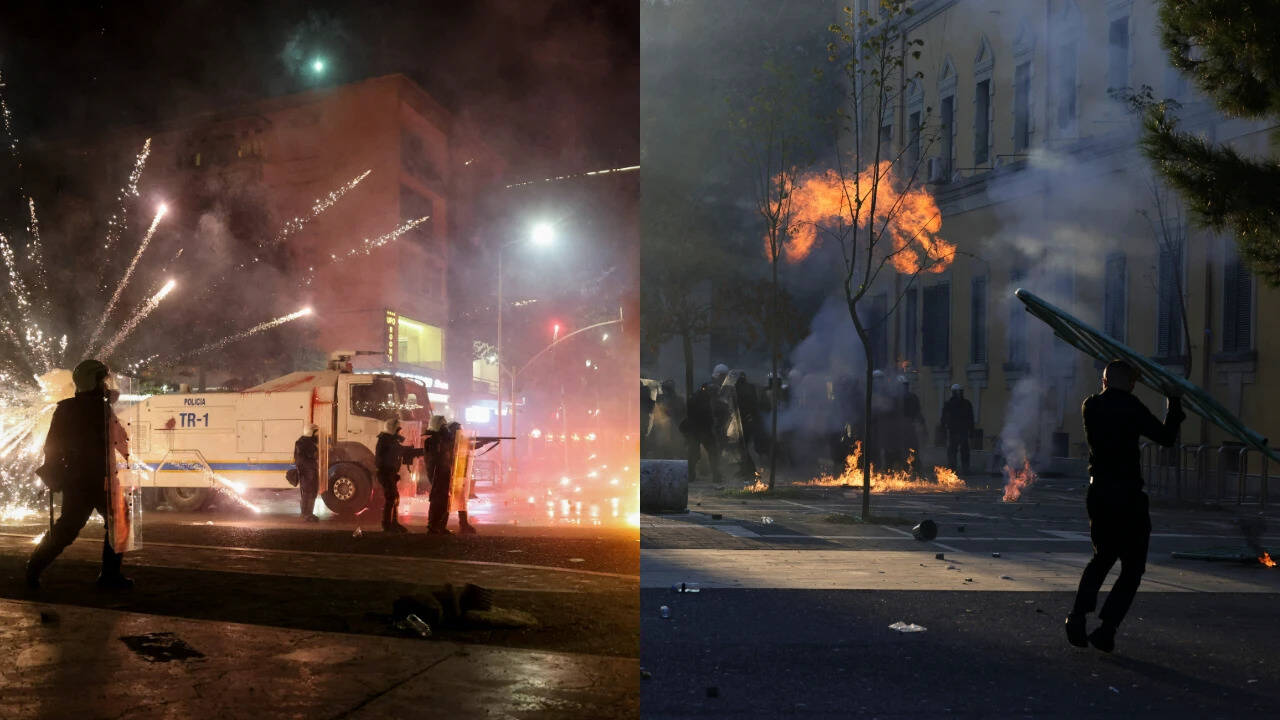
Tirana looked like a war zone last week. Buildings caught fire, flames lit up the night sky, and petrol bombs flew toward the parliament building. Opposition supporters took to the streets in a violent rage. You saw the dramatic photos on social media. Smoke billowed over government squares, riot police fired tear gas, and chaos took over the capital. But if you only look at the burning tires and broken glass, you miss the actual plot.
Albania protests aren't just random acts of public anger. They represent a deep, systemic fracture in how citizens view their government. When people resort to throwing Molotov cocktails at official state buildings, trust has completely cratered. You've got to ask yourself why things reached this boiling point.
The Breaking Point Behind the Tirana Riots
Protests in the Balkans rarely happen overnight. They build up through years of frustration, economic strain, and allegations of systemic corruption. Opposition groups, spearheaded by figures demanding early elections, claim the current administration has hijacked democratic institutions. They point to restricted media freedom, judicial pressure, and economic inequality that leaves ordinary families struggling to pay for basic groceries while political elites look clean on paper.
Let's be real about what street violence achieves. Does throwing a petrol bomb at a parliament window fix inflation? No. Does it change laws? Rarely on its own. But it sends a deafening message. It tells the ruling party that the opposition refuses to sit quietly in a rigged game.
Tirana authorities responded with full force. Water cannons, thousands of deployed police officers, and mass detentions filled the streets. The government calls these demonstrators dangerous anarchists trying to destabilize a sovereign European nation. The protesters call themselves freedom fighters reclaiming a stolen democracy. Both sides spin the narrative to fit their survival strategy.
What Western Media Misses About Balkan Unrest
Mainstream global coverage loves a good spectacle. They slap together galleries of burning buildings, quote a generic official statement, and move on to the next crisis. They treat Albania like a distant anomaly. That is a massive mistake.
The political instability gripping Tirana mirrors tensions rising across Eastern and Southeastern Europe. Citizens are losing patience with democratic backsliding. When institutions fail to hold leaders accountable, people take matters into their own hands. Street clashes become the default language of political dialogue when parliaments stop listening.
You see similar patterns in neighboring nations. Public anger flares up over environmental destruction, shady public-private partnership contracts, and election interference. The ruling elite in Tirana might weather this specific storm. They control the state apparatus, the police forces, and significant portions of the media economy. Yet, burning down half the government quarter leaves a psychological scar that no election victory can easily erase.
Where Albania Goes From Here
Look past the smoke clearing from the parliament square. The fundamental problems remain entirely unsolved. The opposition wants a transitional government. The ruling party refuses to budge. International allies like the European Union urge calm, dialogue, and institutional reform, but their words carry less weight when local leaders realize Brussels values stability over actual democratic depth.
If you want to understand where Albania heads next, watch the courts and the streets simultaneously. If arrests turn into prolonged political imprisonment, expect more riots. If the government opens up genuine space for electoral reform, maybe the temperature drops.
Don't expect a quick fix. Democracy is messy everywhere, but in fragile transitions, it often looks like a battlefield. Pay attention to Tirana. It tells you exactly what happens when a population decides they have nothing left to lose.



