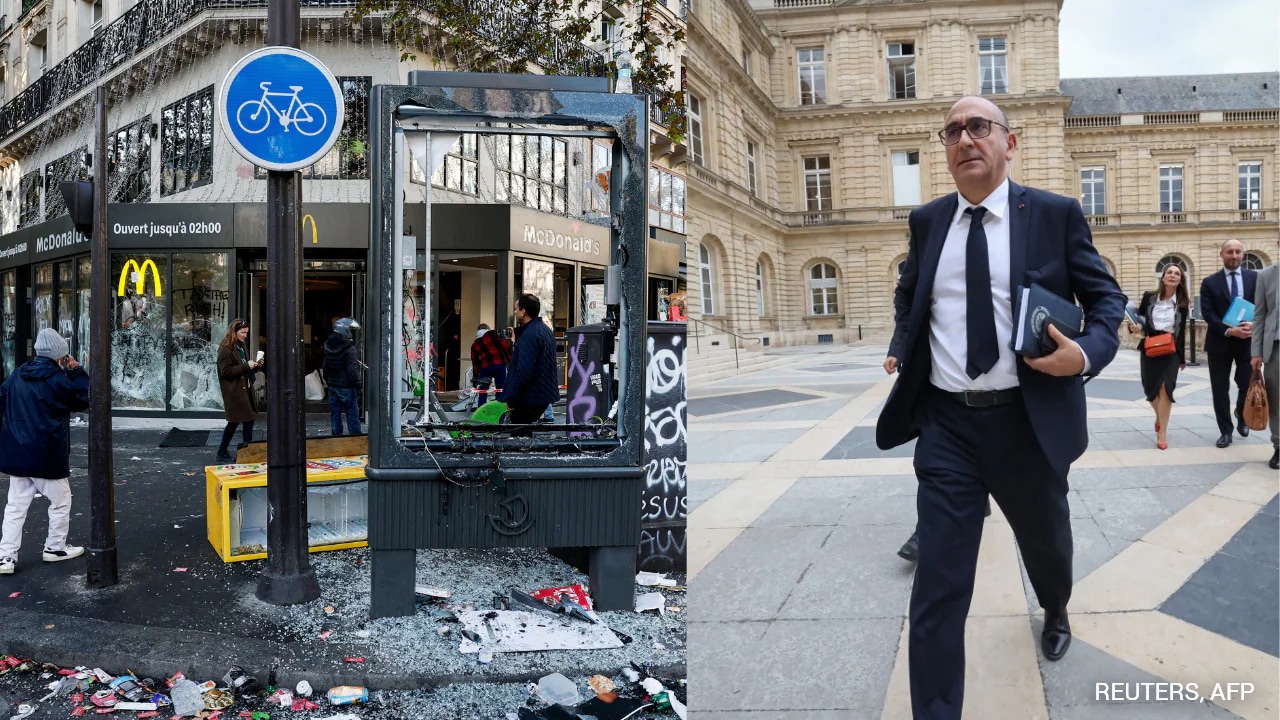
Smoke choked the air around the Arc de Triomphe while luxury storefronts stood wide open, their glass shattered and shelves stripped bare. Half a million people poured into the streets of Paris and other major urban centers under the banner of economic frustration and soaring living costs. What started as legitimate public anger quickly devolved into chaos. Store owners watched their life's work go up in smoke. They couldn't get protection, and security forces stood back as rioters took over intersections.
Interior Minister Laurent Nunez admitted the obvious truth during a televised briefing. Police lost control.
When hundreds of shops are looted, vehicles are torched, and downtown districts turn into combat zones, sugarcoating the situation doesn't work. Nunez offered his resignation to President Emmanuel Macron, citing a massive breakdown in operational planning and intelligence gathering. Macron rejected the exit, demanding a complete overhaul of security tactics instead. Yet the rejection doesn't fix the core issue. France faces a recurring crisis of public order that standard police deployments simply cannot stop.
Where Intelligence and Planning Broke Down
Intelligence failures sit at the center of the weekend disaster. Security planners deployed roughly 60,000 law enforcement personnel nationwide, which sounds like an enormous number. On paper, it is. On the asphalt, it meant nothing because the forces were spread too thin and positioned incorrectly. To understand the full picture, we recommend the recent report by NPR.
The strategy relied on containing peaceful crowds while ignoring the radical fringe elements organizing on encrypted messaging apps. Agitators coordinated flash mobs, hitting multiple high-end retail locations simultaneously. By the time mobile police units received orders to respond, the looters had already vanished into the subway system with stolen merchandise.
Police numbers meant little against fast-moving, decentralized groups of rioters. Intelligence agencies knew anger was boiling over after weeks of student demonstrations and economic strain. Yet commanders failed to anticipate that mainstream economic marches would serve as cover for coordinated criminal looting.
The Economic Toll on Local Businesses
The physical damage extends far beyond broken windows. The French chamber of commerce estimates that over 2,000 businesses suffered direct impacts, with total losses soaring into the hundreds of millions of euros. Small shopkeepers bear the brunt of this destruction. Many lack the capital reserves to survive weeks of closure while waiting for insurance payouts that often get tied up in bureaucratic red tape.
Paris Mayor Emmanuel Gregoire called the sights unbearable after visiting dozens of gutted boutiques in the capital. Walking through commercial districts the morning after the riots feels like walking through a disaster zone. Piles of burned-out scooters block sidewalks. Storefront plywood goes up within hours, but customer confidence takes months to return.
Insurance premiums for urban retailers in France are skyrocketing. Small businesses face a brutal choice. Pay unsustainable rates for coverage or risk financial ruin the next time public demonstrations turn violent.
Why Traditional Crowd Control Fails
France has a long history of street protests. Striking and marching are practically national pastimes. However, the nature of urban unrest has shifted dramatically. Traditional police tactics designed for static picket lines or organized union marches fail completely against modern rioters who use social media to swarm targets in real-time.
When police try to clear aggressive crowds with tear gas and crowd-control munitions, collateral injuries inevitably occur. Over the weekend, a demonstrator lost a hand to a police stun grenade, sparking immediate outrage and fresh allegations of excessive force. Security forces find themselves trapped in an impossible dilemma. Act too aggressively and face accusations of police brutality. Act too cautiously and lose control of the streets entirely.
Macron has authorized local prefects to ban specific rallies if public safety cannot be guaranteed. Critics argue this infringes on the constitutional right to protest. Supporters counter that a government has no higher duty than maintaining basic safety and protecting private property.
France stands at a dangerous crossroads. Fixing this requires more than shuffling cabinet ministers or ordering tactical reviews. Law enforcement needs better real-time intelligence, faster tactical mobility, and a clear legal framework that separates peaceful demonstrators from violent criminals before the smoke starts rising again.



