Gunfire cracks across the southern West Bank, leaving concrete barriers scorched and a volatile security situation spiraling even further out of control. The recent Hebron gun battle, which left two attackers dead and multiple Israelis wounded near checkpoints like Farsh al-Hawa and Yehuda Junction, isn't just another isolated flare-up. It's a flashing neon sign pointing toward a deeper, more dangerous escalation across the occupied territories. Honestly, if you've been tracking security metrics in the region over the past year, you know this explosion of violence was practically inevitable. Tensions didn't just spike overnight; they simmered, boiled, and finally overflowed into open street combat.
Anatomy of a Flashpoint
Let's look at what actually transpired on the ground during this chaotic assault. According to military statements, emergency responders, and local eyewitness accounts, the incident erupted near checkpoints flanking Hebron. Gunmen opened fire on security positions, targeting military personnel and reserve units deployed in the southern sector. The response was swift and brutal. A brief, high-stakes pursuit ended with the Israeli military eliminating two suspects on-site. Meanwhile, emergency medical services scrambled to treat the wounded amid the flying lead.
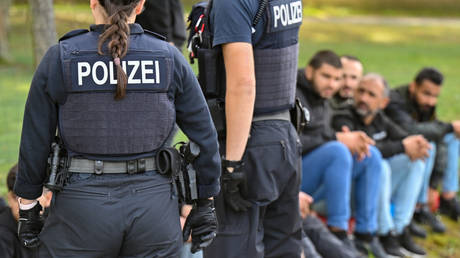
Initial reports from outlets like Haaretz and Ynet indicated anywhere from four to six Israelis injured, with several cases classified as critical or serious. You can't separate this single firefight from the broader operational reality. Security forces immediately clamped down on the surrounding area, sealing off Palestinian villages with sudden blockades, enforcing rigid closures, and launching aggressive search sweeps. Soldiers combed neighborhoods, checking IDs, setting up makeshift checkpoints, and disrupting whatever fragile rhythm of daily commerce managed to survive. This is the grim cycle of the region. A shooting occurs, checkpoints lock down, military reinforcements flood in, and the civilian population on both sides pays the immediate price.
Why Hebron Remains a Powder Keg
To understand why this specific shooting matters so much, you have to look at Hebron's unique, agonizing geography. It's unlike anywhere else in the West Bank. You have heavily fortified Israeli settlements punched right into the historic heart of a dense Palestinian metropolis. Barbed wire, closed shops, military watchtowers, and segregated streets define daily existence here. Reuters has also covered this important issue in extensive detail.
In most West Bank cities, friction happens at the perimeter. In Hebron, the friction is internal, constant, and claustrophobic. Israeli soldiers patrol narrow alleyways where residents live cheek-by-jowl with settlers protected by permanent military detachments. When an attack happens here, it strikes directly at the most sensitive nerve endings of the occupation. It tests the limits of reserve battalions, Home Front Command units, and intelligence agencies trying to stay ahead of decentralized, unpredictable threats.
Most people outside the region misunderstand how these attacks are organized. They aren't always massive, highly coordinated military operations directed by centralized command structures. More often, they are spontaneous or semi-autonomous acts carried out by frustrated youths or small cells who see violence as their only language left. That makes intelligence gathering an absolute nightmare for the military. You can't intercept communications that don't exist until five minutes before a trigger is pulled.
The Ripple Effects Across Military and Civilian Life
When gunfire erupts in Hebron, the shockwaves travel fast. Within hours of the initial shooting, the Israeli military, Shin Bet, and local police launched synchronized operations, pulling in suspects and locking down entire sectors under emergency security protocols. Security sweeps dubbed operations like "Olive Leaf" underscore how quickly routine policing shifts into aggressive counter-terrorism measures during seasonal agricultural peaks, such as the olive harvest, which is already a notorious flashpoint for settler-farmer friction.
The economic and psychological toll is devastating. For Palestinian residents, a security lockdown means closed businesses, blocked roads, canceled medical appointments, and trapped families. For Israeli settlers and soldiers, it means living under constant threat of ambush, where every car passing a junction or every shadow near a checkpoint could conceal an assault rifle.
Think about the sheer psychological weight on the ground. Soldiers pull grueling reserve duty rotations, scanning every civilian face for hostility. Civilians try to buy groceries or get kids to school while dodging the fallout of military curfews and retaliatory raids. Nobody feels safe. Everyone is waiting for the next shoe to drop.
Deconstructing the Information War
In moments of crisis, the information space fractures instantly. Turn on different news networks, and you will see completely different versions of the exact same event. Israeli media outlets emphasize the heroism of the soldiers, the severity of the casualties among reserve battalions, and the necessity of immediate kinetic action to neutralize threats. Palestinian reports focus heavily on the deaths of the young men, the suffocating nature of the military blockades, and the collective punishment inflicted on surrounding villages.
Truth becomes the first casualty. But if you strip away the partisan spin, the baseline facts remain stark. Two lives ended. Multiple people are recovering from severe gunshot wounds. And an entire city is locked down under heavy military guard. Pretending that this is business as usual ignores the steady degradation of security norms that makes a peaceful future harder to imagine with every passing week.
What Comes Next on the Ground
So where does this lead? History offers a bleak blueprint. More checkpoints, tighter restrictions, increased settler friction, and a cycle of retaliation that guarantees more funerals on both sides. The military will likely maintain high troop density in the southern West Bank, trying to squeeze out any remaining armed cells. Yet, history also shows that pure military containment rarely cures the underlying rot. It just forces the pressure underground until the next explosion tears through another checkpoint.
Don't expect a sudden diplomatic breakthrough or a softening of security measures anytime soon. The momentum right now belongs to the hardliners, the checkpoints, and the triggers. Until someone changes the fundamental equation on the ground, Hebron will remain what it is today: a razor-thin wire holding back total chaos.