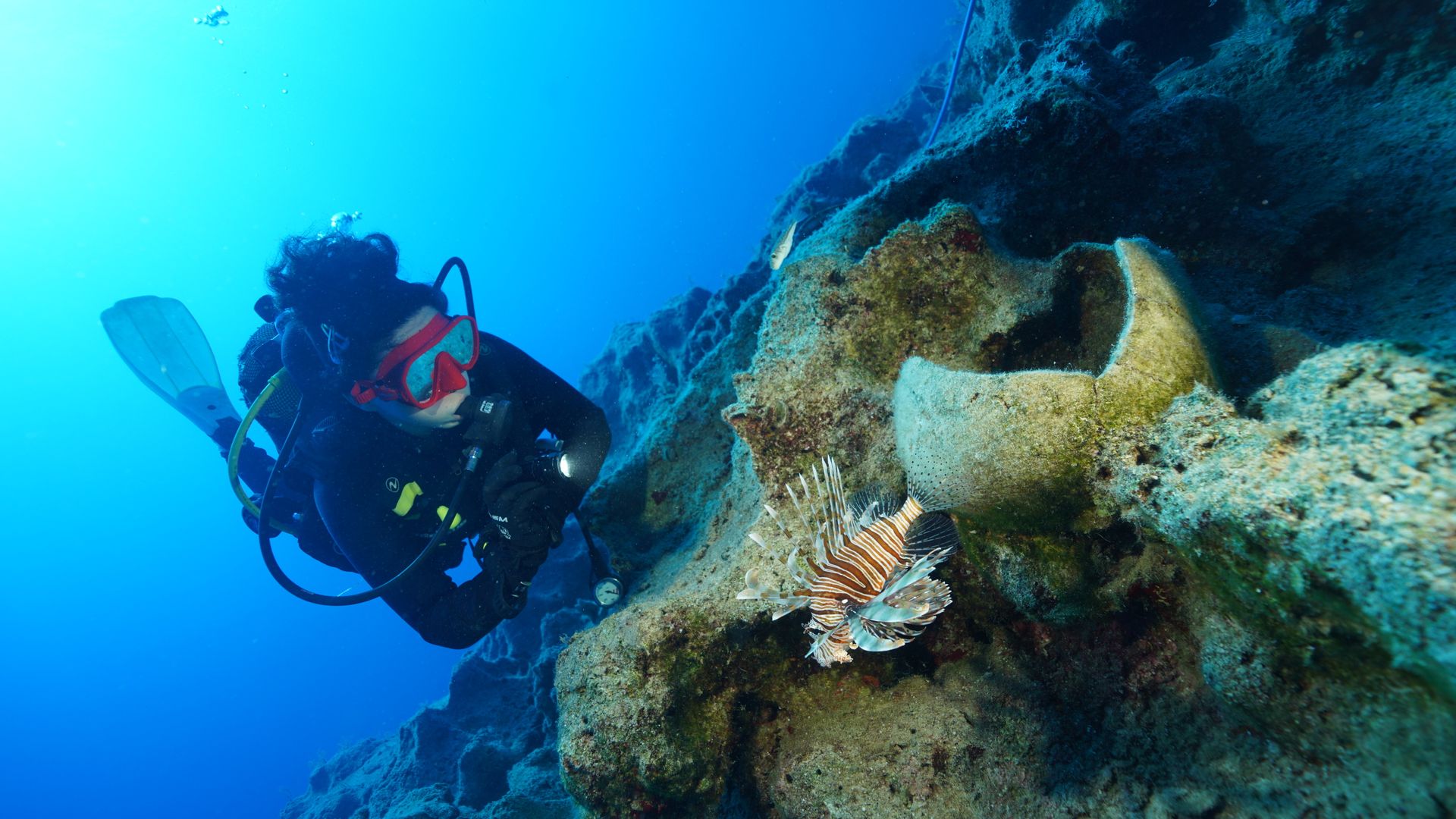
You won't find a single plank of wood left of the vessel, yet archaeologists are calling it the oldest known shipwreck on Earth. Resting thirty meters below the surface near Kekova Island in southern Turkey, an Early Bronze Age merchant ship has upended what experts thought they knew about ancient Mediterranean maritime trade.
Dating back between 4,400 and 4,700 years, this find predates the previous record holder near the Greek island of Dokos by centuries. It puts the ship squarely in the era when the Great Pyramid of Giza was rising along the Nile. When Professor Hakan Öniz and his team from Akdeniz University pulled up the first artifacts, they realized they were touching objects left behind by sailors who navigated the Mediterranean before written records captured everyday life.
Why No Wood Means Archaeologists Had to Get Creative
Without any surviving timber, standard radiocarbon dating methods are useless. So how do researchers pin down a timeline spanning nearly half a millennium?
They look at the pottery. More than thirty ceramic storage jars, known as amphorae, along with three massive stone anchors, tell the story. The Antalya Museum Directorate and Akdeniz University teams examined the specific shapes, handles, and decoration techniques of these clay vessels. Comparing them to known artifacts found at sites like Troy, Crete, and Egyptian burial complexes left zero doubt. The cargo belongs securely to the Early Bronze Age.
Karin Sowada, an archaeologist at Macquarie University who examined the recovered jars, experienced a moment of genuine shock. She looked inside intact amphorae and found thick, shiny organic residue still clinging to the walls. Tests are underway to determine if the containers held olive oil, wine, or precious tree resins. One particular jar featured nine carved symbols and two small holes, pointing to a tool used to churn butter or cheese on board. Sailors were feeding themselves on long voyages across rough waters.
Tracing Ancient Trade Routes from the Levant to Troy
Where was this ten-meter vessel headed? Clay analyses announced by Turkey's Culture and Tourism Minister Mehmet Nuri Ersoy point directly to workshops in the Jordan Valley.
The ship likely departed from a port on the Levantine coast, pushing west toward major Bronze Age hubs like Troy or Crete. The treacherous currents and heavy winds around Kekova Island proved too much for the crew, sending the merchant ship and its cargo tumbling down an underwater slope.
This discovery shatters the notion that early Bronze Age economies were isolated or localized. Merchants were moving industrial quantities of goods across massive maritime networks thousands of years before the rise of classical Greece or Rome. Archaeologists aren't just looking at broken pottery. They're mapping out the economic arteries of the ancient world.
What Happens Next to the Kekova Wreck
Protecting a site sitting thirty meters down isn't easy. Divers are restricted to strict thirty-minute shifts due to depth limits, painstakingly mapping every square meter of the seabed near Antalya.
The artifacts recovered during these excavations won't stay in dusty backrooms. They are undergoing rigorous conservation before heading to the upcoming Mediterranean Underwater Archaeology Museum in Antalya.
Next time you look at a map of the Mediterranean, remember the trade lanes that built ancient civilizations didn't appear by accident. They were forged by sailors battling unpredictable currents in wooden hulls that dissolved away millennia ago, leaving behind only clay, stone, and the undeniable proof of human ambition.