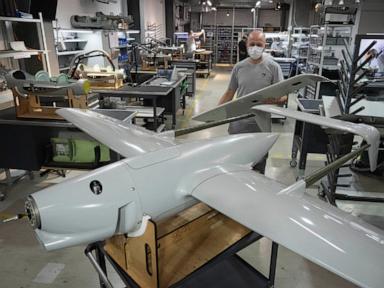
You cannot fight a modern war without eyes in the sky, and for years, those eyes relied heavily on parts shipped straight from China. When the full-scale conflict erupted, cheap commercial drones kept Ukrainian forces alive. Operators bought off-the-shelf quadcopters by the thousands. They strapped explosives to plastic frames and flew them into enemy positions.
Yet, that initial survival strategy birthed a massive strategic blind spot. Beijing controls the raw materials, circuit boards, and battery cells that power the global unmanned aerial vehicle market. Relying on an adversarial or neutral manufacturing giant for frontline hardware is a ticking clock. Ukraine's defense innovators found themselves caught between an urgent need for cheap inventory and the terrifying reality of supply chain vulnerability.
The Real Cost of Cheap Hardware
At the start of the invasion, off-the-shelf commercial drones saved the frontline. They cost a few hundred bucks, flew straight out of the box, and gave outnumbered defenders a fighting chance. But hardware is political. Beijing holds a near-monopoly on critical domains like rare earth magnets, lithium-ion battery processing, and advanced carbon fiber.
When export restrictions hit, production lines stall. Worse, security experts have long warned about the telemetry data leaking back through commercial firmware. If your flight controller originates from a factory with loose oversight, you are broadcasting your telemetry to whoever knows how to listen. Ukrainian manufacturers realized quickly that using off-the-shelf parts wasn't just a logistical bottleneck; it was an open invitation to electronic surveillance and remote disablement.
"If we import, that means dependency, and any dependency means a weaker position."
— Colonel Pavlo Palisa, Deputy Head of the Office of the President of Ukraine
Cutting the Cord on Foreign Parts
Fixing a broken supply chain mid-war sounds impossible, but necessity forced a radical pivot. Ukrainian defense tech companies started localizing production. A year ago, domestic manufacturers struggled to produce basic flight control boards. Today, local workshops and specialized startups are printing their own circuit boards, designing custom software, and dropping foreign dependencies piece by piece.
Take the introduction of specialized systems like fiber-optic quadcopters and AI-driven navigation drones. These machines bypass traditional radio-frequency links, making them immune to standard electronic jamming while relying entirely on localized microelectronics. Companies like Frontline Robotics and various independent defense collectives are pushing hard to replace commercial DJI models with domestically engineered alternatives built specifically for active conflict zones.
What the Global Defense Market Misses
Most Western observers look at Ukraine's drone revolution and see a romantic story of DIY ingenuity. They miss the brutal industrial reality underneath. Scaling a drone army requires massive quantities of aluminum-lithium alloys, specialized chips, and high-capacity battery cells. Even as Ukraine achieves incredible milestones in localizing assembly, complete independence remains an uphill battle. Carbon fiber and certain optical sensors are still difficult to source entirely outside major global supply hubs.
The lesson for every other military force is clear. Relying on a single nation for dual-use components is a catastrophic gamble. If your supply chain relies on a country that could cut off access overnight during a crisis, you don't have an army—you have an expiration date.
Ukraine's painful transition away from foreign components proves that hardware sovereignty must be built before the first shots are fired. For manufacturers worldwide, diversification isn't a business buzzword anymore. It's the difference between staying in the fight and being grounded permanently.
How Ukraine's FPV drones changed modern warfare
This video explores how rapid drone innovations and frontline adaptations continue to reshape tactics on the ground in Ukraine.