Every step could be your last. That is the grim reality facing the few remaining residents of Oleshky, a frontline city along Ukraine's Dnipro River where a harsh winter is colliding with total isolation under Russian occupation.
If you look at the maps, Oleshky looks like any other battered town caught in the crossfire of modern warfare. But walk its streets, or try to leave them, and you find a stark humanitarian vacuum. With no electricity, running water, or reliable food supplies, fewer than 2,000 people remain out of a pre-war population of roughly 24,000. People are digging up gardens for scraps, burning firewood to stay warm, and watching helplessly as supplies dwindle to zero.
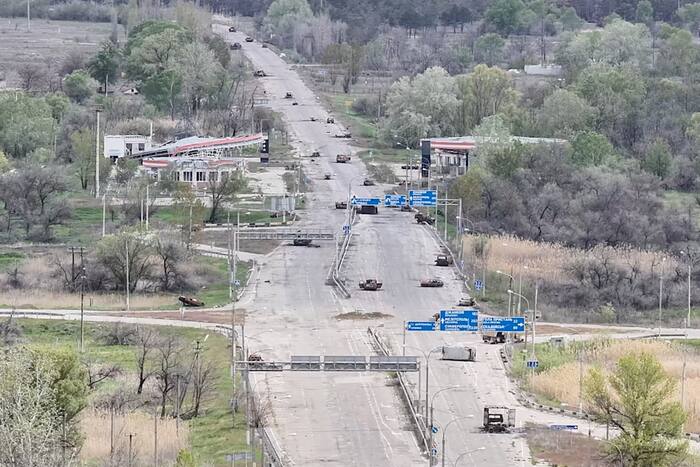
When survival becomes impossible inside the wire, the only choice left is to walk out. But the routes leading away from town—dubbed "the road of death" by locals and regional officials—are heavily mined and littered with burned-out cars and unrecovered bodies.
The Grim Reality of the Road of Death
Escaping Oleshky requires a grueling 20-kilometer trek on foot or by bicycle to the nearby village of Radensk. It's a journey that takes six to eight hours, depending on whether you have to stop and wait out active drone attacks or carry your gear around hidden explosives.
People who make the trip aren't just fleeing for comfort; they are running from starvation. According to reports from exiled municipal administrators and human rights monitors, the last regular food truck reached the city in late May. Since then, the city's hospital basement has filled with bodies, and the local morgue has ceased normal operations due to a complete lack of power.
The danger doesn't stop at the edges of town. Civilians trying to bring basic provisions back to trapped family members—including elderly parents and dozens of children still stuck inside—risk running straight into artillery fire and anti-personnel mines. A single misstep off the asphalt can prove fatal, turning a desperate rescue attempt into another casualty statistic.
Why Humanitarian Evacuations Have Stalled
The plight of Oleshky highlights a brutal diplomatic and military stalemate. Ukraine has repeatedly called for localized ceasefires and humanitarian corridors to evacuate remaining civilians. Moscow-appointed authorities in the Kherson region have occasionally claimed willingness to help, but verifiable security guarantees from Russia have failed to materialize.
Under international law, occupying forces bear the responsibility of ensuring that civilians under their control have access to food, medicine, and survival necessities. Yet, independent human rights offices and international organizations like the International Committee of the Red Cross point out that without binding bilateral agreements and active security corridors, rescue efforts remain paralyzed.
While diplomats argue and negotiations stall, the window to save lives is closing fast. Frontline drone activity makes standard ambulance access virtually impossible, forcing residents to rely on improvised survival methods.
How Drones and Volunteers Are Filling the Gap
With traditional aid convoys blocked, improvised solutions are keeping a fraction of the population alive. Ukrainian military units, such as the 34th Separate Marine Brigade, have resorted to flying heavy-duty drones across the Dnipro River to drop parcels containing canned goods, flour, sugar, and basic medicines like insulin.
These drops offer a lifeline, but military officials are the first to admit they aren't enough to sustain a population through freezing temperatures. The drone packages are designed to give starving residents just enough strength to pack a bag and attempt the perilous walk across the mined roads before winter locks the region down completely.
Local volunteers who successfully escaped earlier in the conflict are working overtime to coordinate reception points and assist those who manage to crawl out of the combat zone. But as temperatures drop and frost settles over the southern front, the humanitarian crisis in Oleshky remains one of the most neglected tragedies of the war.
If no safe corridors open soon, the people left behind face an agonizing winter with no margin for error.



