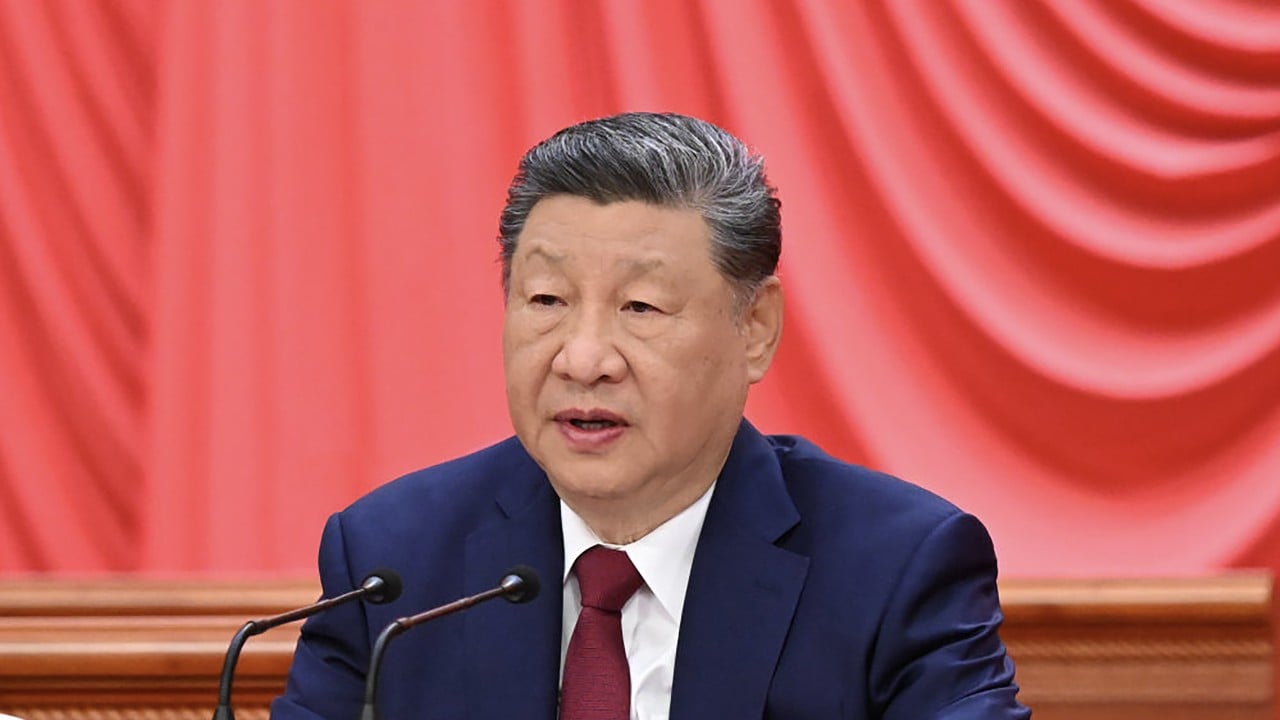
History gets weaponized in Beijing whenever political pressure mounts. Chinese President Xi Jinping stood up at a high-profile anniversary marking ninety years since the Red Army began its legendary retreat and delivered a stark warning. China faces a new Long March.
You don't drop historical references of that magnitude by accident. This speech landed right ahead of a major Communist Party plenum. It tells us plenty about how the leadership views current domestic economic headwinds and tense foreign relations.
The Political Calculus Behind the Rhetoric
Why invoke 1935 right now? The original Long March was a military retreat that ultimately cemented Mao Zedong's grip on power during the Zunyi Conference. By drawing a straight line from that era of survival to modern geopolitical friction, Xi is doing something very deliberate. He is tying absolute party unity directly to national survival.
Domestic economic growth has slowed down significantly from the blistering pace of previous decades. Real estate debt is still casting a long shadow over local government finances. Youth unemployment numbers have forced policymakers into defensive corners. On the external front, trade barriers keep multiplying, and technology restrictions from Western capitals are biting harder.
When things look messy, political regimes look inward and tighten control. Xi's speech wasn't just a history lesson. It was a mobilization order. He wants the entire political apparatus, state-owned enterprises, and the military to understand that comfortable growth is off the table.
What the New Long March Actually Means for Policy
People love to dismiss these speeches as mere propaganda, but they usually signal real policy shifts. When Beijing talks about a grueling march, it translates into concrete actions.
First, self-reliance becomes the absolute top priority. Supply chain independence in advanced semiconductors, green energy tech, and aerospace manufacturing isn't just a corporate goal anymore. It is a matter of state survival. If foreign suppliers can cut off vital inputs, Beijing treats that as an existential threat.
Second, ideological discipline inside the party tightens up. Plenums are where internal power alignments get locked in. By framing the current environment as a life-or-death struggle, dissent gets treated as a luxury the country cannot afford.
Third, military modernization gets pushed even harder. The People's Liberation Army has a strict timeline to meet modernization goals by 2027, which marks the centenary of its founding. Statements about overcoming extreme hardships are designed to keep the military focused, combat-ready, and entirely aligned with central command.
Reading Between the Lines
You have to look at what's missing as much as what's said. When leaders emphasize ideological purity and historical endurance, they are usually acknowledging that quick fixes are unavailable. There is no magic monetary stimulus coming that will instantly recreate the boom years of the early 2000s.
Instead, Beijing is preparing its population for a marathon, not a sprint. The message to citizens and officials alike is simple. Tighten your grip, accept lower growth expectations, and get ready for a prolonged period of friction with the outside world.
The upcoming plenum will test how effectively these themes translate into budgetary allocations and structural reforms. If the past is any indicator, expect more state direction, heavier industrial planning, and zero tolerance for deviation from the core leadership. The march has started, and nobody in Beijing is planning on turning back.