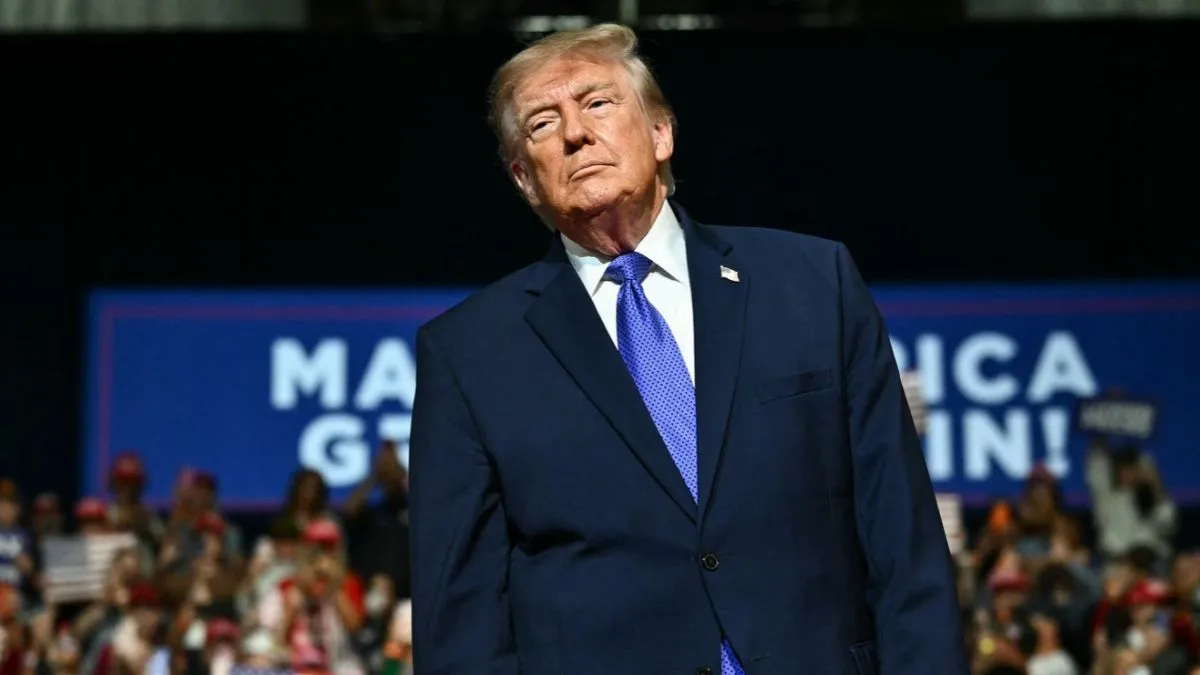
When Donald Trump says Russian President Vladimir Putin "would like to make a deal" to end the Russia-Ukraine war, the headlines write themselves. Cable news panels light up. Social media splits into warring camps within minutes. Yet almost everyone misses the actual diplomatic mechanics hiding behind that four-word phrase.
I've spent years tracking Eastern European security policy and Washington foreign policy messaging, and I can tell you one thing right away. In high-stakes geopolitics, "making a deal" rarely means peace. Usually, it means locking in leverage before the other side realizes what they just signed away.
Trump's recurring claim that Putin wants to negotiate isn't just casual campaign-trail bravado or off-the-cuff commentary. It reflects a specific transactional worldview that clashes violently with how Moscow, Kyiv, and European capitals actually operate. If you want to understand whether a ceasefire is actually on the table—or if we're just watching political theater—you have to look past the soundbite and examine what each side actually demands when the cameras turn off.
Why Trump Keeps Saying Putin Wants a Deal
Trump approaches international conflicts like distressed real estate acquisitions. To him, every protracted war is a bleeding balance sheet that two strongmen can settle over a phone call if they just stop being stubborn.
When Trump tells reporters or rally crowds that Putin "would like to make a deal," he is signaling two things at once. First, he is contrasting his own perceived dealmaking instincts against the traditional diplomatic establishment in Washington, which has prioritized long-term military aid to Kyiv and strict isolation of Moscow. Second, he is testing the waters for a rapid diplomatic reset that avoids open-ended American financial commitments.
Here is the catch. Trump often frames Putin's willingness to talk as an urgent desire to end the bloodshed. In reality, Moscow has never opposed talking. The Kremlin has consistently stated it is open to negotiations—provided those talks recognize what Russian officials call the "new territorial realities" on the ground.
That distinction changes everything. Wanting a deal on your own terms isn't the same thing as wanting peace.
The Trap of the "24-Hour" Mindset
During his 2024 presidential campaign and into his subsequent diplomatic push, Trump repeatedly argued that the war would never have started on his watch and that he could settle it quickly once in office. That framing puts immense pressure on the negotiating table before anyone even sits down.
If you announce to the world that you need a fast deal, your adversary immediately raises their price. Putin knows Washington's political calendar better than most members of Congress. He knows that an American administration eager for a quick diplomatic victory might pressure Kyiv into painful concessions just to get a signature on paper.
What Putin Actually Means by a "Deal"
If you read transcripts from the Kremlin, Putin's speeches at the Valdai Discussion Club, or statements from Russian Foreign Minister Sergey Lavrov, Moscow's shopping list hasn't shrunk since 2022. If anything, it has hardened.
When Putin hints that he is ready to negotiate, he isn't offering to pull Russian troops back to the pre-2022 borders, let alone the pre-2014 borders before the annexation of Crimea. Moscow's baseline conditions for a ceasefire typically include:
- Formal recognition of Russian control over Crimea and the four Ukrainian regions Moscow claimed to annex in September 2022 (Donetsk, Luhansk, Zaporizhzhia, and Kherson), even the parts Russian forces don't fully occupy.
- Permanent Ukrainian neutrality, meaning Kyiv must legally abandon its bid to join NATO and prohibit Western military bases or long-range weapons on its soil.
- The lifting of Western sanctions, unfreezing Russian central bank assets and reopening European energy and financial markets.
- Limits on the size and capability of Ukraine's armed forces, echoing the harsh terms Moscow pushed during the failed Istanbul talks in spring 2022.
Look at that list again. That isn't a compromise. It's a capitulation document dressed up as a peace treaty.
Think about it from Moscow's perspective. Why would Putin settle for less when Russian forces have spent years grinding forward in eastern Ukraine at massive human and economic cost? To sell a ceasefire to Russia's domestic audience and nationalist hardliners, the Kremlin needs an undeniable trophy. Freezing the conflict along current front lines—or forcing Ukraine to cede even more territory—gives Putin a victory lap while leaving Ukraine militarily vulnerable for a future offensive.
Why Kyiv Sees a Quick Deal as an Existential Threat
For Ukrainian President Volodymyr Zelenskyy and the Ukrainian public, the word "deal" triggers immediate alarm bells. They have already lived through two previous "deals" with Russia—Minsk I in 2014 and Minsk II in 2015.
Both agreements were brokered by European leaders to stop active fighting in the Donbas region. Neither stopped Russia from launching a full-scale invasion in February 2022. From Kyiv's point of view, a poorly enforced ceasefire doesn't end a war; it just gives Russia a three-to-five-year breather to rebuild its depleted tank brigades, restock artillery shells, fix its logistics, and strike again when Western attention has drifted elsewhere.
Ukraine's leadership faces an impossible math problem right now. Manpower shortages on the front lines and constant Russian strikes on the energy grid have exhausted the country. Polls from the Kyiv International Institute of Sociology (KIIS) have shown a gradual uptick in Ukrainians willing to consider territorial compromises if it guarantees real survival and security.
Yet those same surveys reveal a hard red line. Ukrainians will not accept a deal that leaves them defenseless. Without ironclad security guarantees—like NATO membership or binding mutual defense pacts backed by Western troops and air defenses—any piece of paper signed in Geneva, Istanbul, or Washington isn't worth the ink used to print it.
The European Blind Spot
While headlines focus almost exclusively on Trump, Putin, and Zelenskyy, European leaders are stuck in the middle holding the bill. Countries like Poland, the Baltic states, Finland, and Germany view a forced Ukrainian concession not as the end of a regional crisis, but as the starting gun for the next one.
If Russia successfully redraws European borders by force and gets rewarded with sanctions relief and territorial recognition, every defense ministry from Warsaw to Stockholm has to rewrite its security budget overnight. European diplomats have quietly warned Washington that cutting a bilateral deal over the heads of Kyiv and Brussels would fracture the transatlantic alliance far worse than any trade dispute ever could.
The Leverage Reality Nobody Wants to Admit
Here is the uncomfortable truth that both partisan cheerleaders and cable news pundits routinely ignore. Neither side currently holds enough leverage to dictate total surrender, yet both sides think time is on their side.
Russia's economy is running hot on military Keynesianism. Defense spending has surged to levels unseen since the Soviet era, propped up by oil revenues flowing to China and India and dual-use components routed through third countries. However, that war economy is showing severe cracks. Interest rates from the Russian Central Bank have soared past 20 percent to fight runaway inflation, labor shortages are starving civilian industries, and Soviet-era armored vehicle stockpiles are visibly thinning on satellite imagery analyzed by open-source intelligence groups like Oryx and the International Institute for Strategic Studies (IISS).
Putin can't sustain this burn rate forever. He knows it. That is why the idea of a deal—specifically one that lifts sanctions and freezes his territorial gains—actually appeals to the Kremlin right now.
On the flip side, Ukraine cannot win back every inch of occupied territory through brute-force infantry assaults without massive, sustained Western weapons deliveries and deeper mobilization at home. Western aid packages have repeatedly stalled in legislative gridlock, leaving Ukrainian artillery units rationing shells while Russian glide bombs flatten frontline towns.
So when Trump says Putin wants to make a deal, he is half right. Putin wants a deal. He just wants a deal that cements his gains before Russia's economic bill comes due.
How a Real Negotiation Would Actually Work
If Washington genuinely wants to broker a lasting settlement rather than a temporary pause, shouting about deals on television won't get it done. Real diplomacy in this conflict requires flipping the current script on its head.
First, you don't announce concessions before sitting at the table. Telling Moscow ahead of time that NATO membership for Ukraine is off the table or that U.S. aid is drying up removes the exact pressure needed to force Putin to compromise. In any negotiation—whether it's a corporate merger or a ceasefire—you maximize your leverage before you offer an off-ramp.
Second, any credible ceasefire needs an enforcement mechanism with real teeth. That means an agreed demilitarized zone monitored by international observers, backed by automatic "snapback" sanctions and immediate weapons transfers to Kyiv if a single Russian shell crosses the line. Without automatic consequences, ceasefires in Eastern Europe collapse within weeks.
Third, frozen Russian sovereign assets—roughly $300 billion held mostly in European clearinghouses like Euroclear—have to be part of the equation. If Moscow wants sanctions relief, those funds should go directly toward rebuilding Ukrainian cities destroyed by Russian missiles.
What You Should Watch Next
News cycles around Ukraine negotiations move fast, and most of the daily noise is designed to manipulate market sentiment or domestic voters. If you want to know whether Trump's statements are turning into an actual diplomatic breakthrough or just stalling out, ignore the press conference adjectives and track these four concrete indicators instead:
- Changes in U.S. weapons authorization: Watch whether Washington expands or restricts Ukraine's ability to use long-range missiles inside Russian territory. Increasing pressure signals an attempt to force Putin to the table; throttling aid signals an effort to force Kyiv to accept harsh terms.
- Backchannel envoy appointments: Serious negotiations don't happen through public speeches. Look for the quiet appointment of seasoned diplomatic heavyweights—former ambassadors, intelligence officials, or NSC directors—traveling between Washington, Kyiv, Brussels, and Riyadh or Ankara.
- Russian Central Bank moves and energy exports: Keep an eye on Russian inflation metrics and shadow-fleet oil tanker sanctions. When economic pain spikes in Moscow, Kremlin rhetoric about "openness to dialogue" suddenly gets much more specific.
- European defense spending and troop discussions: Watch how Paris, London, and Warsaw respond to Washington's proposals. If European capitals start accelerating bilateral security pacts with Kyiv, it means they expect Washington to push a deal they can't support.
Keep your eyes on the leverage, not the headlines. Until Moscow believes the cost of continuing the war exceeds the value of the territory it holds, every talk of a "deal" is just another move on the battlefield.