You’ve seen the flashing signs, the rumble strips, and the faded painted warnings on asphalt. None of them seem to grab a speeding driver's attention quite like a woolen police officer holding a fake speed gun. When traditional council interventions stall out, communities take matters into their own hands. That is exactly what happened in Fillongley, Warwickshire, where frustrated residents traded standard activism for yarn.
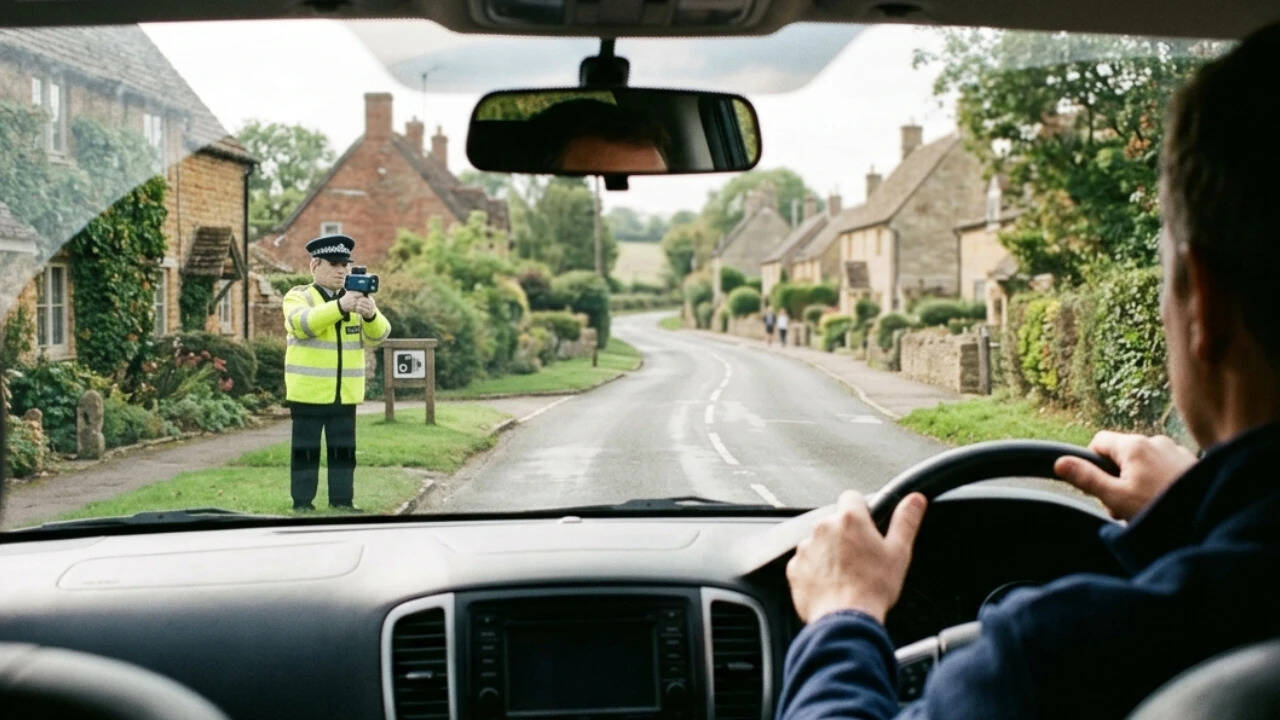
After enduring 11 road accidents at a notorious crossroads over four years, the local "Knit and Natter" group spent four months crafting life-sized traffic decoys. Placed strategically along Nuneaton Road, these handcrafted figures—complete with an imitation speed camera and high-visibility vests—are forcing motorists to tap their brakes. It sounds eccentric, but it exposes a deeper municipal failure when it comes to traffic calming.
When Bureaucracy Fails Knitters Step In
Road safety shouldn't depend on arts and crafts projects. Yet, rural communities across the UK often wait years for local authorities to approve and fund permanent infrastructure fixes. Warwickshire County Council eventually approved traffic lights for the troublesome Fillongley junction, but bureaucratic delays mean residents are left vulnerable in the meantime.
Heather Badham, a parish clerk involved in the project, pointed out that about ninety percent of crashes at the junction happen because incoming drivers miss warning signs entirely before blowing through the turn. A flashing thirty-mile-per-hour sign wasn't enough to snap distracted motorists out of their daily routines.
So, the community built visual friction.
Human brains rely heavily on pattern recognition. When drivers scan a road, they ignore familiar warning signs because they blend into the scenery. But introduce an unexpected anomaly—like a life-sized figure dressed in high-visibility gear—and the brain instantly forces a survival check. Drivers slam on their brakes because, for a split second, they think they are about to get a ticket.
The Psychology Behind Visual Traffic Calming
Traffic engineers have known for years that psychological deterrents often outperform rigid legal enforcement. Speed cameras get vandalized, and mobile patrol cars have limited shift hours. A knitted officer standing guard twenty-four hours a day fills the predictability gap.
It's guerrilla urbanism at its finest. You don't need a million-dollar civil engineering budget to change driver behavior. You need to trigger hesitation. When a motorist spots a decoy holding a faux speed gun, their immediate physical reaction is deceleration. Even if they realize a mile down the road that the officer was stuffed with yarn, the immediate hazard was neutralized.
Of course, this approach has limits. Decoys don't issue fines or stop reckless drivers who simply don't care. They rely entirely on shock value. Once regular commuters learn the locations of the knitted sentinels, the braking effect tends to wear off. That reality highlights why these grassroots projects serve best as temporary band-aids rather than permanent solutions.
The Vulnerability of Community Heritage
Handmade public art faces an unfortunate hazard: theft and vandalism. The Fillongley group suffered a disheartening blow when their most intricate creation—a knitted RAF officer crafted in memory of a member's father who served in World War II—was stolen during daylight hours.
Losing a piece of local heritage over a prank or petty theft underscores the friction that occurs when private citizen initiatives enter public spaces. When you put unpaid, deeply personal labor out on the roadside, you expose it to unpredictable public reactions.
Despite the setback, the community's experiment sparked global conversations about rural traffic management. It proved that ordinary people aren't content to sit back and wait for slow-moving municipal gears to turn.
If local authorities want to stop accidents at dangerous rural junctions, they could learn a thing or two from a group of knitters. Real change often starts with creativity, a ball of yarn, and a refusal to stay silent. Keep your eyes on the road, because you never know if that next police officer standing by the shoulder is made of cotton or bone.