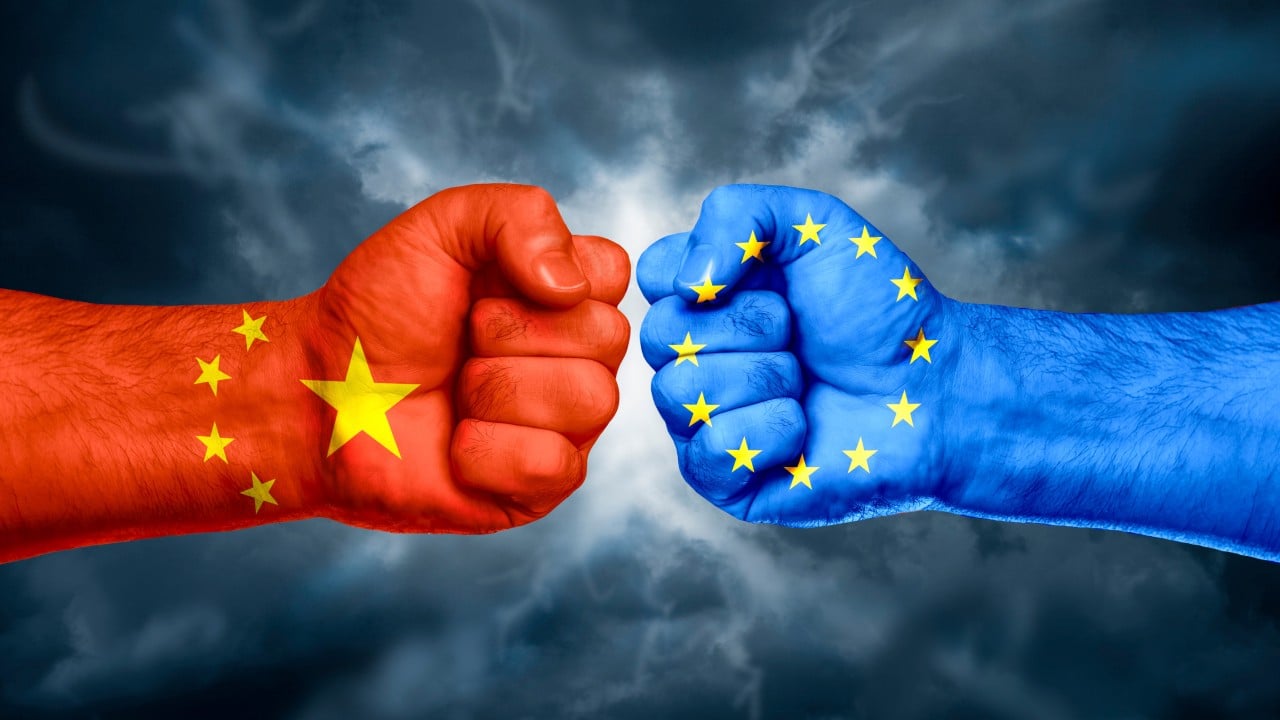
European politicians love a good threat. Walk into any conference room in Brussels, and you will hear top officials warning that the bloc's massive trade deficit with China—hovering near a staggering one billion euros a day—has reached a breaking point. They talk about defensive mechanisms, emergency import curbs, and sweeping new trade powers designed to act as an economic kill switch.
Yet when push comes to shove, Brussels always blinks.
If you look past the aggressive headlines and the tough rhetoric from European leaders, a different reality emerges. The European Union will keep pulling its punches on China. Understanding why requires looking past political theater and examining the structural weaknesses, economic dependencies, and deep internal divisions paralyzing the bloc.
The Cost of Retaliation Is Simply Too High
Threatening tariffs on Chinese electric vehicles or hybrid cars sounds great on the evening news, but European industries have skin in the game. German automakers rely heavily on the Chinese market to maintain their profit margins. If Beijing decides to retaliate against European luxury cars, agricultural products, or aerospace equipment, factories in Stuttgart and Munich will bleed. Analysts at Bloomberg have provided expertise on this trend.
Take the recent diplomatic scrambles. Even as France and Germany push for stiffer trade defenses and warning systems to monitor a surge in Chinese shipments, national leaders hesitate to pull the trigger on broad unilateral sanctions. They know that a tit-for-tat trade war doesn't happen in a vacuum. China remains a primary buyer of European industrial goods at a time when domestic growth across the eurozone remains sluggish.
Internal Fractures Weaken Brussels
The European Union is not a single nation with a unified economic policy. It is a collection of 27 member states with competing national interests.
While countries like France advocate for a heavily protected internal market, export-dependent nations view aggressive trade crackdowns with sheer dread. Consensus is hard to forge when one country's manufacturing stronghold is another country's export lifeline. Beijing understands this dynamic well. Chinese trade officials know they don't need to out-negotiate the European Commission; they just need to exploit the cracks between member states.
Whenever Brussels threatens sweeping market restrictions, quiet diplomacy kicks in behind closed doors. Temporary deals—such as recent understandings on hybrid car export monitoring or modest rare-earth export license commitments—get traded for actual confrontation. It is a classic cycle of buying time rather than solving structural problems.
What Structural Imbalances Actually Mean for the Future
The core issue isn't just about cars or green tech; it is about a macroeconomic imbalance that years of dialogue have failed to fix. China's high savings rate and massive manufacturing capacity mean that Beijing must export its way through weak domestic demand. Europe, with its open borders and commitment to free-market rules, absorbs the impact.
When former trade commissioners and international economists point out that the trade deficit is unsustainable, they are entirely right. Deindustrialization in European heartlands is a genuine political threat. But acknowledging a problem and having the collective political willpower to solve it are two entirely different things.
Until European leaders bridge the gap between their loud regulatory threats and their quiet economic anxieties, the bloc will continue to bark loudly while keeping its teeth safely tucked away. The next time you read about an imminent trade showdown, watch what Brussels actually does rather than what it says. You will notice it pulls its punches every single time.