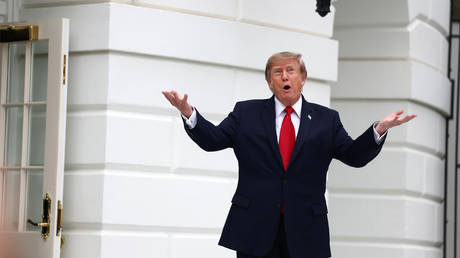
Donald Trump is rattling the saber again. During a campaign rally in Florida, the US president dangled the threat of launching another military campaign against Iran, casually referring to it as "another little Epic Fury." It is a chilling echo of the rhetoric that preceded the initial US-Israeli strikes back in February.
If you are wondering why diplomatic lines are fraying so fast in the Middle East right now, you are not alone. Washington is quietly pulling personnel out of embassies across the region, and the Pentagon is moving troops away from vulnerable bases. These exact maneuvers mirrored the countdown to Operation Epic Fury earlier this year.
What Operation Epic Fury Actually Means For The Region
Trump told the crowd in Florida that Tehran should simply agree to Washington's terms, warning that another strike could be just around the corner.
"We may do another little Epic Fury, or they’ll agree," Trump declared. He expressed deep skepticism that Iranian leadership would give in to American demands, setting the stage for potential conflict escalation.
The White House continues to walk a fine semantic line. The Pentagon officially declared the first phase of Operation Epic Fury over back in May, yet hostilities never truly stopped. Trump insists that past US strikes obliterated Iran's nuclear enrichment capacity while crushing the country militarily and financially. Tehran, however, views these claims as bluster masking an ongoing campaign of economic warfare and destabilization.
The Diplomatic Exodus From Middle East Embassies
Words are one thing, but logistics tell the real story. The US State Department has announced significant staffing reductions across several key diplomatic posts in the Middle East, explicitly blaming rising threats from Iran and Yemen’s Houthi movement.
Embassies in Jordan, Lebanon, Qatar, and the United Arab Emirates are scaling down to skeletal crews. While these missions remain technically open, the message to nonessential staff and dependents is unmistakable. This follows an earlier directive ordering families and nonessential personnel out of Saudi Arabia entirely.
An intelligence memo landed on Secretary of State Marco Rubio’s desk recently, claiming that Tehran has intensified efforts to target American diplomats and military assets abroad. Whether this intelligence represents an imminent threat or political justification for posture adjustment remains heavily debated among regional analysts.
Why Washington Is Relocating Troops Right Now
Military repositioning is happening behind the scenes at a breakneck pace. Regional defense contractors and intelligence insiders note that tactical assets are shifting away from exposed forward-operating bases to secondary defensive perimeters.
This mirrors the exact troop movements seen prior to the February strikes. Back then, Washington claimed the repositioning was purely defensive. Days later, Operation Epic Fury was underway.
Critics argue that repeating this cycle traps US foreign policy in a loop of perpetual escalation. Every time diplomatic talks stall, the threat of force returns to the table, leaving little room for actual de-escalation or long-term regional stability.
Keep a close eye on Persian Gulf shipping lanes and diplomatic statements coming out of Geneva and Doha over the next week. If backchannel talks fail to materialize, another military flashpoint in the Middle East is no longer just a worst-case scenario—it is an active countdown.


