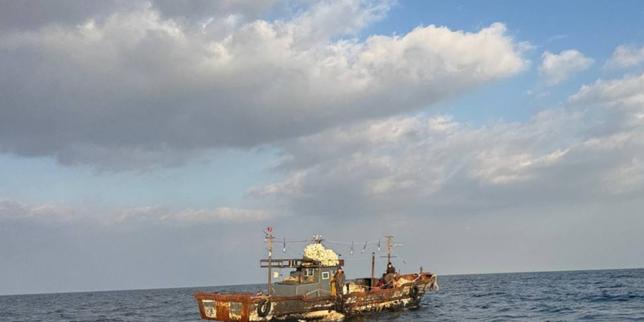
When a drifting vessel carrying seven North Korean fishermen was pulled from international waters near South Korea's Ulleung Island, it sparked a familiar yet high-stakes dilemma. These incidents happen more often than most people realize. Battered fishing boats routinely drift south across maritime boundaries due to engine failures, severe weather, or meager equipment. But what happens next depends entirely on the personal choices of the crew on board.
In this specific case, South Korea's Unification Ministry confirmed that six of the fishermen explicitly stated they wanted to return home. Following standard protocols, and after a joint investigation alongside the United Nations Command to verify their free consent, Seoul facilitated their repatriation across the maritime border. Meanwhile, the seventh fisherman made a completely different choice. He expressed a firm desire to remain in South Korea, choosing a path of defection that separates his immediate future entirely from his homeland.
Why Defection Carries Heavy Real-World Stakes
Under South Korean constitutional law, all individuals originating from the northern half of the peninsula are legally viewed as citizens. This means anyone arriving from the North is generally granted sanctuary if they choose to stay. Yet, exercising that choice is never simple.
North Korea maintains an extremely harsh stance on citizens who cross the border or choose to remain abroad. Defection is treated as an unforgivable betrayal, and the consequences for anyone who stays behind—or for extended family members left in the North—can be devastating. Because of these immense risks, South Korean intelligence and investigative agencies conduct rigorous screenings. They need to ensure that anyone staying is doing so entirely of their own free will and isn't caught up in espionage or coerced circumstances.
The Protocol Behind Maritime Rescues
Handling drifting vessels in the East Sea requires careful international coordination, especially now that direct communication channels between Seoul and Pyongyang are effectively severed. Because normal inter-Korean hotlines are dead, authorities rely heavily on the United Nations Command and international maritime communication networks to notify North Korea of upcoming repatriations.
When the six fishermen returned north on their vessel, coordination had to be meticulous. Weather conditions were monitored closely, and maritime alerts were broadcasted early in the morning to ensure a safe handover at sea where waiting North Korean vessels could receive them. Similar protocols played out previously, though sometimes delayed by damaged equipment or a lack of direct acknowledgement from Pyongyang.
The Broader Human Reality
Behind the geopolitical headlines and diplomatic messaging lie ordinary people struggling to survive. North Korea's persistent economic hardships, combined with aging and poorly equipped fishing fleets, mean that engine breakdowns and accidental border crossings are an ongoing hazard for local crews pushed far out to sea just to secure food or meet strict catch quotas.
Over thirty thousand North Koreans have chosen to flee south over the past few decades, escaping chronic economic distress and political repression. Every time a drifting boat is rescued by the South Korean coast guard, it highlights the stark contrast between two heavily fortified societies where a simple twist of fate at sea can force individuals to make the most monumental decision of their lives.
The six fishermen are now back in North Korea, while their former crewmate begins the long, complex process of integrating into South Korean society. The sea border remains as tense and heavily guarded as ever, but for one individual, the crossing changed everything.