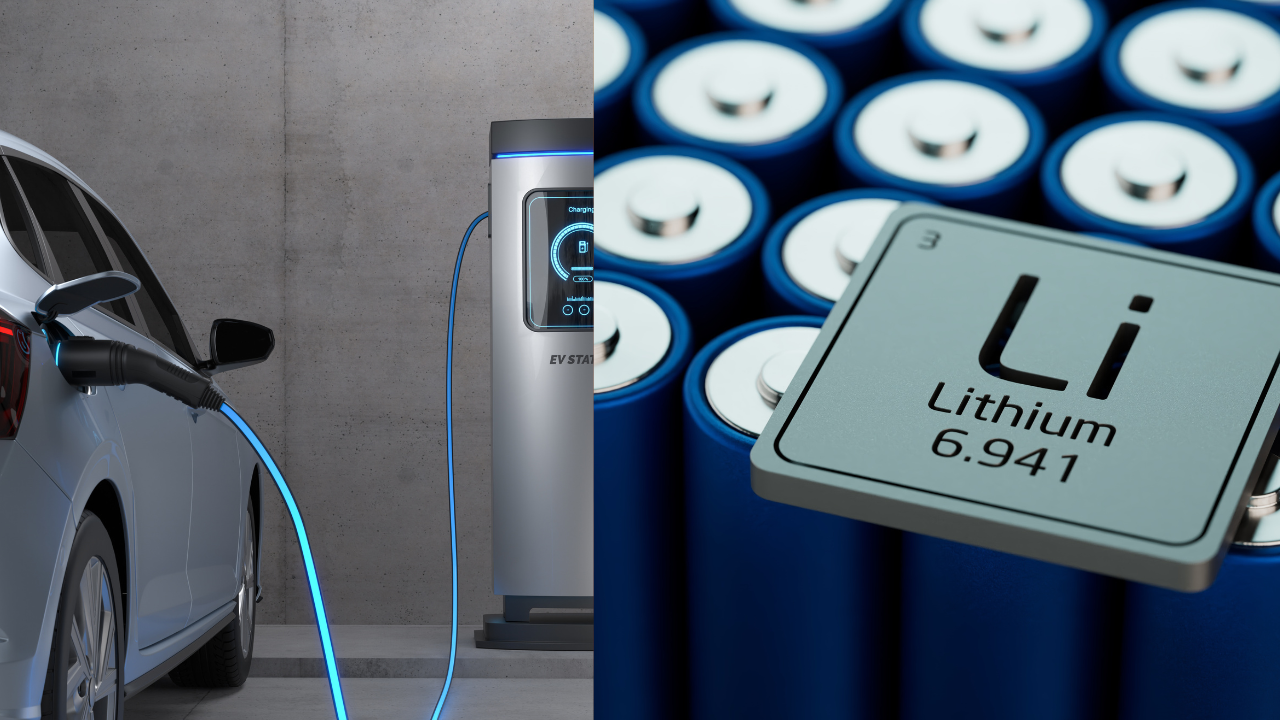
Ever walk out to your electric vehicle on a freezing winter morning, look at the dashboard range estimate, and wonder why the car has to haul around half a ton of heavy metal just to get you to the grocery store? I’ve stood there staring at shrinking range numbers myself, thinking that modern battery design has hit a brick wall. Range anxiety isn't going away because we keep solving battery capacity by simply adding more weight. Carmakers build bigger packs, which make cars heavier, which then demands even more energy. It is an exhausting cycle.
Fortunately, researchers are finally changing how we think about energy storage. Scientists at the Korea Advanced Institute of Science and Technology (KAIST) have pulled off a breakthrough that targets the fundamental architecture of next-generation batteries. By borrowing techniques usually reserved for fabricating microchips, they are solving the exact flaw that has kept anode-free batteries out of your driveway.
Stripping Away the Dead Weight
If you open up a standard lithium-ion battery pack today, you find a mountain of graphite. Conventional cells store lithium inside an anode built from graphite. It works, but graphite takes up space and adds bulk. Engineers have long dreamed of "anode-free" designs. By stripping out the graphite entirely, you leave massive amounts of internal real estate free for actual energy storage.
The math here is straightforward. If you remove the traditional anode materials, battery packs can shrink dramatically while packing a much higher energy density. Lighter cars require less energy to move. You get a compounding benefit: smaller batteries lead to lighter vehicles, which lead to significantly better driving range on a single charge.
Sounds perfect, right? There is always a catch.
The Dendrite Problem Nobody Talks About
Anode-free batteries have lived in university labs for years because they behave badly under pressure. When you charge an anode-free battery, lithium ions have nowhere structured to go. Instead of laying down neatly, lithium tends to accumulate unevenly, forming sharp, microscopic needles called dendrites.
These tiny metallic thorns pierce the internal barriers of the cell. They trigger short circuits, degrade performance rapidly, and can turn a high-energy pack into a safety hazard. Past attempts to fix this involved adding thick protective coatings or extra chemical agents. But those quick fixes added weight back into the system, completely ruining the primary perk of going anode-free.
You cannot solve a weight problem by piling on more layers. The KAIST team, led by researchers Jinwoo Lee and Hee-Tae Jung, realized they had to change the playing field entirely.
Borrowing Tricks From Silicon Valley and Chip Foundries
Instead of fighting the lithium buildup with clumsy physical barriers, the research team looked at how microchips are made. Semiconductor factories etch incredibly precise, microscopic patterns onto silicon wafers every single day.
The engineers applied that exact precision mindset to the copper current collector inside the battery. They etched thousands of tiny, uniform tubes directly into the copper foil. Think of these microscopic channels as an organized parking lot for lithium ions.
Paired with an ultrathin protective coating rich in materials like MXene, this structured copper surface forces lithium to deposit smoothly and evenly during every charge cycle. It encourages the formation of a stable, lithium fluoride-rich interface layer. Unwanted chemical reactions drop off sharply, and dendrites struggle to form.
The results, published in Advanced Functional Materials, prove that precision engineering can override chaotic chemical degradation.
What This Means for Your Next Car
We are not seeing these cells in showroom cars tomorrow morning. Laboratory breakthroughs still face the grueling gauntlet of industrial scaling, cost reduction, and rigorous automotive safety testing. Moving from a successful benchtop trial to mass production usually takes several years.
Yet, the trajectory matters. The psychological barrier keeping many drivers tied to gasoline cars is the fear of inconvenient charging stops and degraded battery health after five years of ownership. If automakers can deliver cars that drive four hundred miles on a pack that weighs half as much as today's standard modules, the entire landscape shifts.
Stop worrying about whether heavy solid-state packs will ever materialize. The real revolution is happening at the microscopic level on a strip of copper foil. Keep your eyes on how fast manufacturing lines can adapt these semiconductor techniques. That is where the true future of electric driving is being built.